
‘Most’ voters in Pagoh will support Muhyiddin’s party
PAGOH (JOHOR) — Massive earthworks and construction greet visitors as they enter Pagoh, a sleepy town with almost 50,000 voters, located an hour-and-a-half away from the bustling city centre of Johor Baru.
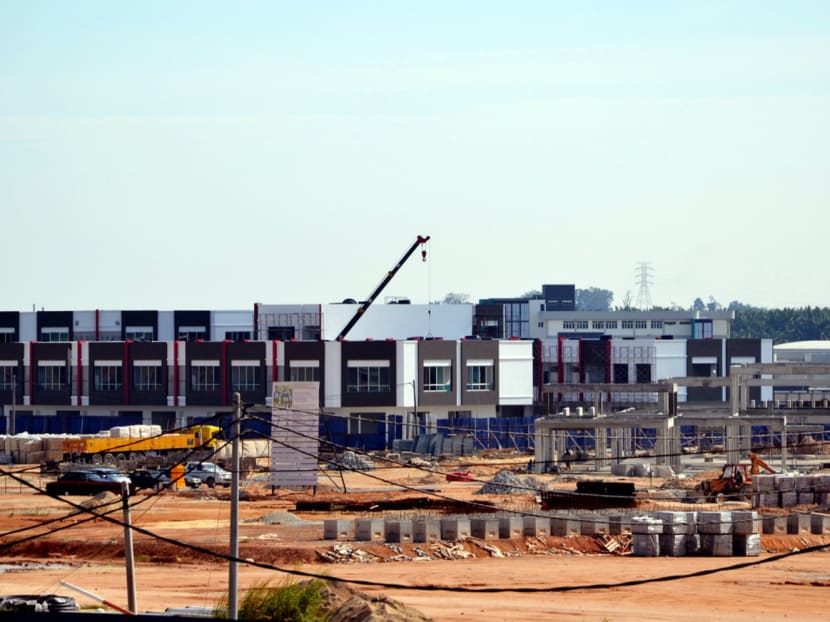


PAGOH (JOHOR) — Massive earthworks and construction greet visitors as they enter Pagoh, a sleepy town with almost 50,000 voters, located an hour-and-a-half away from the bustling city centre of Johor Baru.
The flurry of building activity is for the development of the 1651ha Bandar Universiti Pagoh (Pagoh University City), the brainchild of former education minister and its Member of Parliament Muhyiddin Yassin, who wanted to transform the semi-rural constituency, surrounded by rubber and palm oil plantations, into a world-class education hub.
But, traverse a little further and life goes on for the locals, who spend their free time gathering at coffee shops, catching up on the latest news.
These days, however, the topic is almost always centred on Mr Muhyiddin and the new party that he is setting up — Parti Pribumi Bersatu Malaysia (Bersatu).
The Bumiputra-centric party, which is backed by former Malaysian prime minister Mahathir Mohamad, seeks to unseat the United Malays National Organisation (Umno) at the next General Election, which is speculated to be next year.
Bersatu has allied itself with the opposition parties to ensure straight fights against the ruling Barisan Nasional (BN) coalition, of which Umno is the anchor party.
Mr Muhyiddin, who was sacked from his deputy prime minister post by Prime Minister Najib Razak last year after criticising the government’s handling of 1Malaysia Development Berhad (1MDB) and booted out of Umno in June this year for teaming up with the opposition, is expected to lead Bersatu, while Dr Mahathir will be its chairman.
Mr Muhyiddin’s sacking vibrated around Pagoh and the ripples have yet to subside.
“We were very upset when we heard he was sacked. We never expected it, he was just doing what was right all along, voicing out irregularities in 1MDB,” Mr Mohd Suhaimi Mohd Som, who worked as a supervisor at a nearby palm oil plantation, told TODAY.
In contrast, Mr Muhyiddin was calm when he returned to the constituency where he had been MP for nearly 40 years, recalled Mr Mohd Suhaimi. The trip took place a few days after he was removed from Umno this year.
“He was a picture of patience and advised us not to be carried away by our emotions,” he said.
Mr Mohd Suhaimi, 53, is confident that the Malays, which made up of about 60 per cent of the voters in Pagoh, will back Mr Muhyiddin’s new party, claiming that those he spoke to had voiced their support for Bersatu. About 30 per cent of the voters are Chinese while the rest are minority groups.
“Many are just waiting for the party to be officially set up before joining,” he said.
Despite the excitement surrounding the new party, Ms Michelle Tan said Bersatu has yet to embark on any activities such as membership drive or rallies. “No, there is nothing yet around here,” the 34-year-old who works as a secretary told TODAY.
She believed that the Chinese community, who has been cool towards BN, will be receptive towards the new party.
“Since the 2008 General Election, the Chinese have wanted to see change and we believed Bersatu ,which had pledged to work with the opposition will be able to do that,” she said.
Retiree Gan Kim Seng, 72, who was enjoying afternoon tea with friends at a coffee shop in Grisek New Village told TODAY Mr Muhyiddin’s new party may have a chance to dent Umno’s hold in Pagoh.
Pagoh is an Umno stronghold since it was carved out from the Muar Dalam constituency in 1974, with the opposition hardly making a dent at previous general elections.
In the 2013 General Election, Mr Muhyiddin retained the seat for the seventh time with a margin of nearly 13,000 votes.
“Now that Muhyiddin has left Umno, his new party may help draw some Malay support away from Umno,” said Mr Gan.
The opposition is banking on Bersatu to pull in more Malay votes in Pagoh and Johor, given that Muhyiddin was a heavyweight in Malaysian politics and his words carried weight.
“You have to remember, Muhyiddin was with Umno, he knows how the party works very well,” said Mr Lim Eng Guan, the opposition Democratic Action Party (DAP) assemblyman for Bekok told TODAY. Bekok is a state seat located next to Pagoh.
“When he goes stumping and talked about 1MDB and the government, the Malay community will listen and be more open to what he says.”
However, Umno and its senior BN partner, the Malaysian Chinese Association (MCA), had both played down the impact of Bersatu on their support bases.
Umno Supreme Council Member Nur Jazlan Mohamed told TODAY Bersatu will not have any big impact in Johor, saying that Mr Muhyiddin was not as influential in Johor as everyone thought.
“He didn’t build up a strong support base in Johor. And when you team up with the opposition, it’s even a bigger boo-boo,” he said, adding that Johor — the birthplace of Umno — and the Malays will never be able to accept that.
Umno Pagoh Youth Chief Mohd Zaid Abdul Rahman said there is no clear-cut support for Bersatu, as the party has yet to be approved to be set up by the Registrar of Societies.
He also expressed confidence Umno members will still be with the ruling Malay party.
“I feel Umno members will still remain with us,” he said, citing the Pagoh division meeting on Aug 21, which saw members pledging their support for the party.
He also said only a handful of members had left since Muhyiddin was sacked from the party.
Out of 106 Umno branches in the constituency, only five branch chiefs have quit their posts following Mr Muhyiddin’s sacking.
MCA Pagoh division chief Lim Pay Hen acknowledged that Mr Muhyiddin still commanded the respect of the locals and is an attentive MP who visited the area often, even when he was a minister and deputy prime minister. But the jury is still out as to whether the Chinese community will back the new party.
“It all depends on what are the issues that are taking place once the General Election is called,” he told TODAY.
Stay in the know. Anytime. Anywhere.

Subscribe to our newsletter for the top features, insights and must reads delivered straight to your inbox.
By clicking subscribe, I agree for my personal data to be used to send me TODAY newsletters, promotional offers and for research and analysis.






