
Velvet bean supplements in spotlight after Thai woman’s death
The death of a young Thai woman after ingesting velvet bean capsules has drawn attention on the tropical plant and the use of it in health supplements.
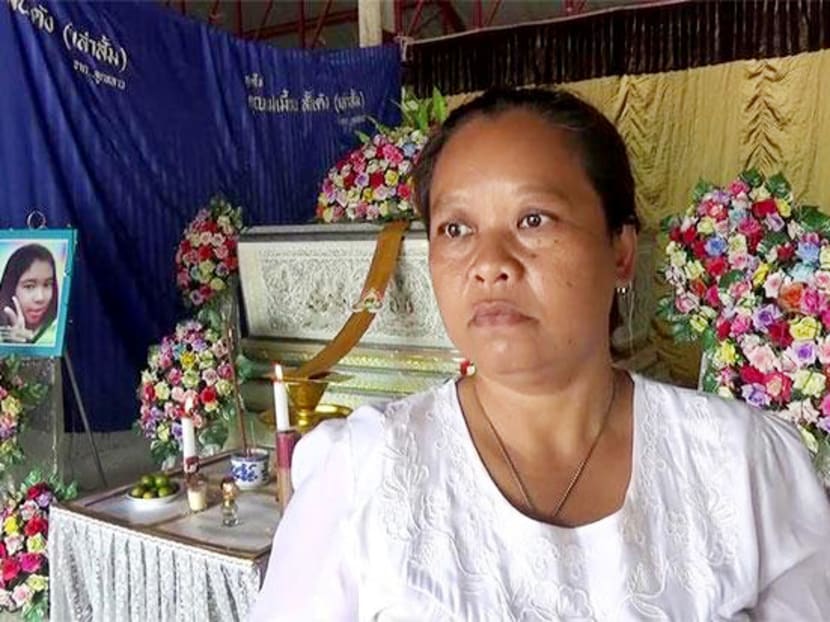
The mother of the Trang woman said the direct-sale company claimed that there were no adverse effects from taking the supplements. Photo: Bangkok Post

The death of a young Thai woman after ingesting velvet bean capsules has drawn attention on the tropical plant and the use of it in health supplements.
Velvet bean, or Mucuna pruriens, was on the public radar in Thailand last year after Prime Minister Prayut Chan-o-cha urged farmers to grow it instead of rice to cope with drought. The herb recently made newspaper headlines again when Sataporn Panthong, a 21-year-old woman in the southern province of Trang, was found dead last month after taking four capsules of velvet bean extracts — samples she received after becoming a member of a direct-sale business selling the supplement product.
The dose resulted in severe allergic reactions, beginning with a swollen face, rashes and bleeding tongue, ending with visual impairment caused by eye discharge. She was pronounced dead shortly after being sent to a nearby hospital.
The results of the autopsy are expected to be released in a few weeks. The mother of the dead woman, who suffered from epilepsy, claimed a sales agent for the direct-sales company said there were no adverse health effects from taking the supplements. That is why they decided to take the capsules, said the mother, Ms Aiya-ornin Adulwiboon, 48.
A week after the death, the Thai Food and Drug Administration (FDA) said extracts of velvet bean were banned ingredients in dietary supplements.
But FDA deputy secretary-general Paisarn Dunkhum said velvet bean seeds can still be used as traditional medicine. Velvet bean, known as ma mui in Thai, has been used for centuries in Indian herbal medicine as a healing plant for many ailments. But it is illegal in some countries, including Thailand, to use it in a dietary supplement, he said.
Following the death of Sataporn, the Thai Foundation for Consumers has urged the FDA to seize all velvet bean supplements in the market and is calling for manufacturers to create better awareness of potential health dangers and to stop advertising their merchandise.
“Consumers purchasing dietary supplements after seeing Internet ads are trending now,” said Ms Sathaporn Arakwatana, the foundation’s spokeswoman. “The FDA should take action given they are responsible for enforcing food-related law. Websites selling (illegal) products should be closed down because a large number of velvet bean supplements sold online are still available. No one stops selling them and they are easily accessible. Some of them are priced at only 30 baht (S$1.20) a sachet.”
According to Ms Supaporn Pitiporn, a herb expert and chief pharmacist of the Chao Phraya Abhaibhubejhr Hospital in Prachin Buri province, although the case of the Trang woman has once again woken Thai consumers to safety issues of dietary supplements, it also has left them with a lot of questions, especially in terms of the country’s health care.
“What is going on with Thailand’s universal healthcare system? Many Thais have access to free medical treatments but the question is why do they still seek more alternatives? This shows that people need more than conventional Western health care. They need quality herbs from sources they can trust too,” said Ms Supaporn.
Native to Africa and tropical Asia, Mucuna pruriens has been known for being able to cause itchiness when in contact with human skin. But according to Ms Supaporn, the herbal plant has medicinal benefits too.
“Thais also call it kama medicine,” added the pharmacist. “Since the old days, it has been used to fix erectile dysfunction.”
Moreover, it has also been found to be able to alleviate Parkinson’s disease, a degenerative disorder of the central nervous system that affects body movements. The disease itself results from an insufficient production of the brain chemical dopamine. The chemical agent Levodopa, or L-dopa, is converted to dopamine in the brain. And velvet bean seeds have been reported to contain L-dopa.
The consumption of velvet bean these days is mostly in capsule form. But according to Ms Supaporn, the Thai traditional medicine recipe recommends people roast velvet bean seeds before grinding them into powder. Velvet bean powder can then be mixed with warm water for consumption. The maximum daily dosage is 5g, around a teaspoon.
“When there are cases of people dying from taking unlicensed herbal products, it jeopardises local wisdom,” Ms Supaporn stressed. “Authorities will come out and say this and that is not right. Why do they not go a bit deeper into the details like if people still want to use the herb, how they should use it properly and safely.” BANGKOK POST
Stay in the know. Anytime. Anywhere.

Subscribe to our newsletter for the top features, insights and must reads delivered straight to your inbox.
By clicking subscribe, I agree for my personal data to be used to send me TODAY newsletters, promotional offers and for research and analysis.






