
Bedbug infestations widespread in Hong Kong, study finds, with one expert warning of ‘public health issue’
HONG KONG — The problem of bedbugs is common and widespread in Hong Kong and not limited to families living in crowded subdivided flats, a Chinese University study has found.

Members of the Anti-Bed Bugs Research Action Group release the findings of a citywide survey on Tuesday (Sept 24).

HONG KONG — The problem of bedbugs is common and widespread in Hong Kong and not limited to families living in crowded subdivided flats, a Chinese University study has found.
A survey released on Tuesday (Sept 24) showed that nearly 30 per cent of Hongkongers polled, or 159 respondents, said they were affected by bedbug infestations. More than 50 per cent of those surveyed said they faced some type of insect infestation, including mosquitoes and fleas.
The online questionnaire was completed by 600 people from July to August. Among those who took part, 43 per cent lived in public housing and 34 per cent lived in private accommodation. Only 1.7 per cent of those who took part in the survey lived in subdivided private flats.
Wong Hung, an associate professor in the university’s department of social work, acknowledged the limitations of the study. He said those living in subdivided flats in the city’s poorest neighbourhoods might not have the language and computer skills to take part in the online survey.
Even so, he said the report reflected a widespread problem and painted a worrying picture.
“The problem of bedbugs is worse in subdivided flats, but it is also common in ordinary households in Hong Kong,” Mr Wong said. “The problem has got worse in the last five or six years. Many people are forced to sleep rough in 24-hour fast food chains because they could not sleep well in their home infested with bugs.”
The pilot survey was conducted by the Anti-Bed Bug Research Action Group, formed in January by CUHK professors and students.
Survey respondents were from 16 districts in Hong Kong, with 11 per cent from Kwun Tong district in Kowloon, followed by 10 per cent from Sha Tin. About 64 per cent of participants had received tertiary education, while the biggest income group had a total monthly salary ranging between HK$10,000 and HK$30,000 (S$1,755 to S$5,270).”
Professor Chiu Siu-wai, from the university’s school of life sciences, said bedbugs had high fertility rates and could live for months without their major nutrient — blood. She said the insects attach themselves to furniture and even human bodies.

“One reason why it’s really hard to eradicate bedbugs from your home is because it’s difficult to cut off the source and find their breeding ground and hiding place,” she said. “But you can prevent the growth of bedbugs by removing idle piles or boxes of possessions lying around your home, because bugs can grow in the cracks.”
The research group said bedbugs had a serious affect on residents’ health and finances. Of those polled, 43 per cent reported serious sleeping problems because of the bugs, while 42 per cent said their emotional and psychological outlooks were seriously affected.
Over 30 per cent said they were discouraged from returning home because of bedbugs, and around 15 per cent of respondents reportedly slept no more than five hours a night on average.
Among the 159 respondents who reported bedbug infestations, nearly 80 per cent experienced itchy skin and skin redness caused by bedbug bites. Around 40 per cent said they were bitten at least 10 times each month on average.
More than 80 per cent of those surveyed said they had spent extra money on medication or doctor’s visits because of bites, but only six to seven per cent found it effective.
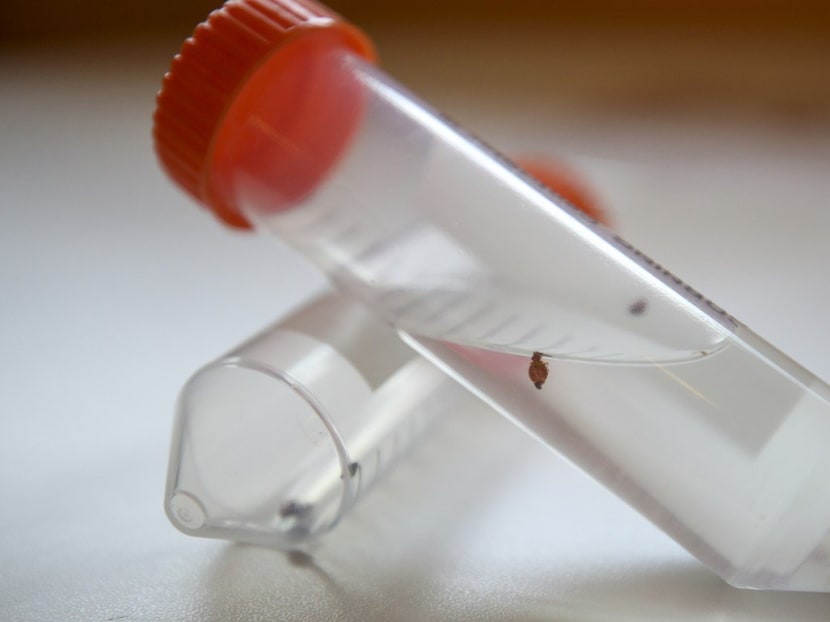
Mr Wong said traditional wisdom could help kill or alleviate the bug problem.
“Wash your clothes, bedsheets and pillow covers frequently and thoroughly, with hot water of over 60 degrees Celsius which can kill bugs.”
He said one of the most serious cases he had come across during home visits was an elderly man with one leg whose whole house was infested with bugs.
“The wall has red and yellow marks, some were blood stains and faeces of bedbugs. And there are big and small bugs all over bedsheets, in all four corners of the bed, as well as shells of the bugs on the floor,” he said. “There is a foul smell in the whole house, but the man said he didn’t have problems getting asleep because he already got used to being bitten.”
Mr Wong said the government could help by raising awareness about the issue.
“Many residents, when told about bedbugs, don’t want to change their lifestyles and throw away their infested furniture. The government needs to stop treating it as a personal hygiene and lifestyle problem, and start seeing it as a public health issue.” SOUTH CHINA MORNING POST
Related topics
Hong Kong bed bugs housingStay in the know. Anytime. Anywhere.

Subscribe to our newsletter for the top features, insights and must reads delivered straight to your inbox.
By clicking subscribe, I agree for my personal data to be used to send me TODAY newsletters, promotional offers and for research and analysis.






