
#trending: Woman in China claims she 'almost burnt her home down' after trying microwave food hack recipe by influencer
A woman in China attempted to follow an influencer's video of a quick recipe for instant steamed egg custard, but almost burnt her house down in the process.
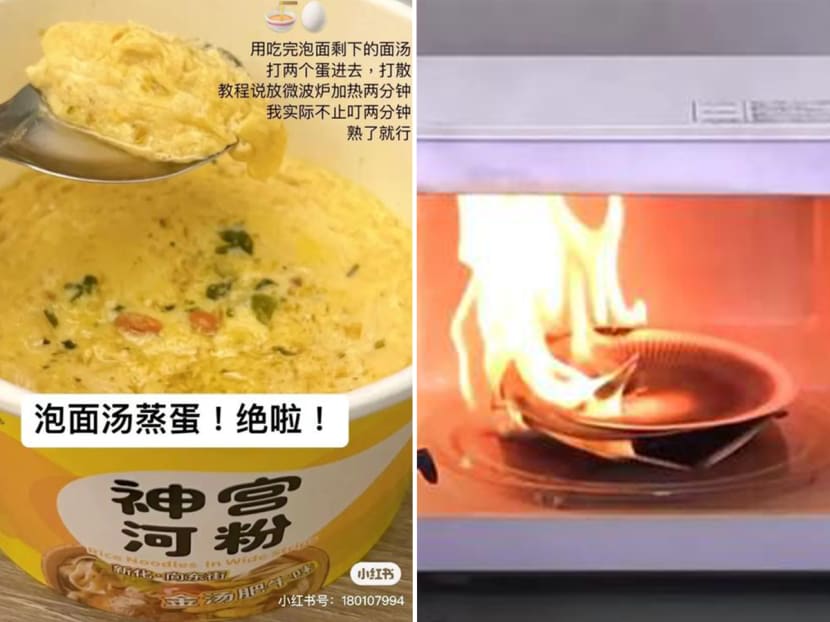

- A woman in China shared her experience of "almost burning" her home down while making instant steamed egg in a microwave
- She followed a food influencer's recipe and microwaved an instant noodle cup. However, the paper cup caught fire after a few minutes
- Following the incident, the woman shared some tips on microwave safety


CHINA — Ever watched a food hack video on social media and thought to try it for yourself one day? A woman in China attempted to follow an influencer's video of a quick recipe, but almost burnt her home down in the process.
The Beijing woman, who goes by her pen name “Chuang Qiaoyu”, wrote about her close call on Chinese science education platform Guokr.
She had seen an intriguing recipe for instant-noodle-flavoured steamed egg shared by a food and lifestyle influencer on Chinese social media platform Xiaohongshu. The influencer was not named.
Wondering “what could possibly go wrong”, the woman decided to try the recipe.
It seemed straightforward: Simply crack two eggs into leftover instant noodle soup and pop it into the microwave and after applying slight heat, the egg will form into steamed custard egg.
Following the recipe, Chuang placed the instant noodle soup and egg mixture in the microwave, along with the instant noodle paper cup and aluminium lid still stuck on.
This is when things started to go south. After two minutes in the microwave, smoke started billowing out of it.
Fortunately, she managed to turn off the microwave before the fire became bigger and extinguish the flames shortly after.
What remained was a half-burnt instant noodle cup.
“For a bowl of instant noodles, I almost burnt down my home,” the woman lamented about her experience. She did not specify what kind of home she lives in.
THINGS YOU SHOULD NOT PUT IN A MICROWAVE
Following the incident, Chuang gave some tips on what not to put into a microwave in order to avoid facing the same predicament as her.
Metals
First rule for using microwaves: Never put metal in the microwave.
Aluminium foil is especially hazardous in microwaves as the thin metal reflects energy instead of absorbing it. This can create sparks that start a fire, explained American cable channel Food Network.
In addition to metal containers and aluminium foil, watch out for food packaging with metal materials, such as instant noodle cup lids, potato chip packaging and Tetra Pak cartons. Recycled paper packaging may also contain traces of metal, wrote Chuang, who has a Masters in Pharmacy.
This is where she made a mistake: An instant noodle paper cup together with an aluminium lid is a dangerous combination. The aluminium lid had sparked in the microwave, setting the paper cup on fire.
Eggs
Microwaving an egg in its shell can be a messy — and dangerous — affair. The rapid heating process of the egg leads to steam build up inside the shell which can cause it to explode into an eggy mess, wrote Food Network.
Plain water
It may seem harmless to pop a mug of water into the microwave, but doing so can be dangerous. Plain water can quickly become superheated without boiling in a microwave. While the bubbles aren’t visible to you, the hot water can cause severe burns when splattered, according to American magazine Real Simple.
Non-microwave safe containers
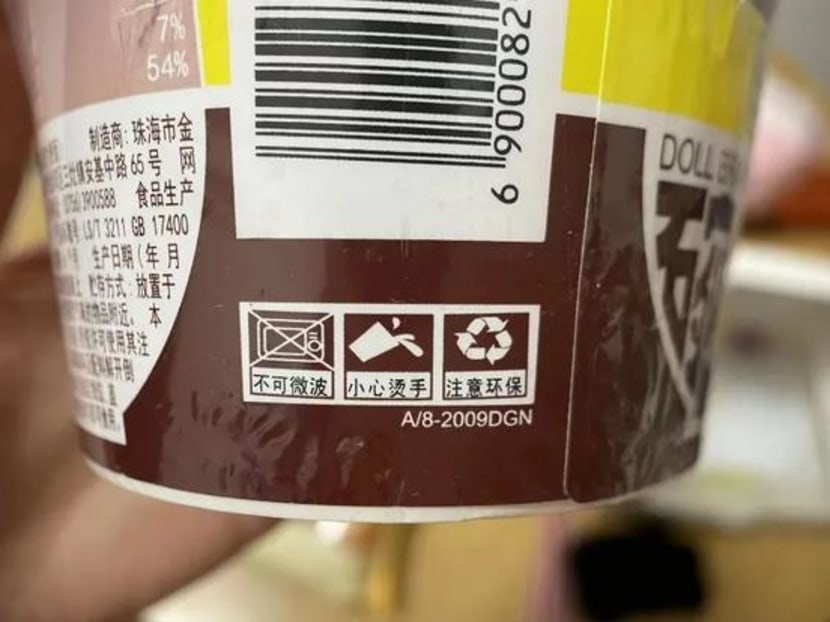
When in doubt, check for the microwave safe labels. Materials that are non-microwave friendly may pose a fire risk or melt, releasing unsafe chemical compounds such as BPA.
Packages intended to serve only cold foods, such as yogurt cups and butter containers, should especially not be heated.
These containers are not designed for heat resistance and cannot withstand high temperatures, according to United States daily The Atlanta Journal-Constitution.
Also note that some microwaveable lunch boxes have lids that are not heat resistant and need to be removed before heating, wrote Chuang.
A final word of advice: To avoid overheating foods in a microwave, choose the shortest time option. Food can be reheated multiple times in short bursts, which also allows for more even heating, advises Chuang.
Related topics
Trending recipes fire cookingStay in the know. Anytime. Anywhere.

Subscribe to our newsletter for the top features, insights and must reads delivered straight to your inbox.
By clicking subscribe, I agree for my personal data to be used to send me TODAY newsletters, promotional offers and for research and analysis.






