
Coronavirus could kill more than 2 million people by the end of the year, researchers say
HONG KONG — Nine months into the coronavirus pandemic, the global death toll hit 1 million last week — but health researchers say that number could more than double in the next three months.
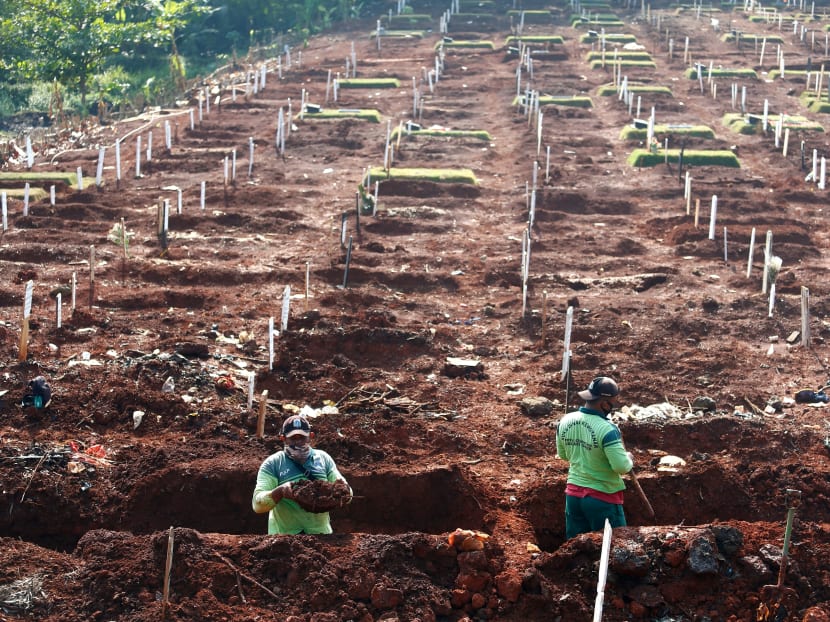

HONG KONG — Nine months into the coronavirus pandemic, the global death toll hit 1 million last week — but health researchers say that number could more than double in the next three months.
And as it goes into winter and the flu season, the northern hemisphere could see a sharp rise in cases.
On Monday (Oct 5), the World Health Organization (WHO) said its “best estimates” indicated that roughly one in 10 people worldwide — more than 20 times the number of confirmed cases — may have been infected by the virus that causes the disease Covid-19. It warned of a difficult period ahead.
By the end of the year, some 2.3 million people could have died from the disease, according to an estimate by the University of Washington’s Institute for Health Metrics and Evaluation.
That level of acceleration “makes sense”, said Dr Janet Hatcher Roberts, co-director of the WHO Collaborating Centre for Knowledge Translation and Health Technology Assessment in Health Equity.
“It is accelerating given the normal spread of an epidemic and the fact that this virus is so infectious,” she said.
“It makes sense because we are not strictly following control measures in a coordinated and systematic fashion. This leaves holes in our ability to respond to an epidemic.”
People experiencing “pandemic fatigue” and ignoring health advice and those who denied there was a pandemic meant it was likely to continue accelerating, Dr Hatcher Roberts said.
Dr Michael Baker, a professor of public health at the University of Otago in New Zealand, agreed the pandemic was continuing to accelerate globally, with over 35 million people infected so far.
But he said the pattern was becoming increasingly stratified as diverse response strategies were having an effect.
“Countries in the Asia-Pacific region are in many cases pursuing a containment approach that is keeping case numbers low. By contrast, most countries in Europe and North America are seeing resurgences in case numbers when they loosen suppression measures,” Dr Baker said.
However, patterns in many low- to middle-income countries were harder to track because of their low levels of testing, he said.
As the northern hemisphere moves into winter and flu season, health experts have urged the public to stay vigilant.
Dr Baker noted that winter conditions were associated with an increase in rates of respiratory infections in temperate countries.
That was because people spent more time in crowded indoor areas, the virus could potentially survive longer in cooler conditions, and also exposure to cold weather could lower defences against infection, he said.
“We would therefore expect the risk of Covid-19 transmission to increase in winter, which could cause a spike in infections during that period in the northern hemisphere,” he said.
Dr Donna Patterson, a professor at Delaware State University who studies global health, said for countries with active outbreaks, a strong public health response — including testing, treatment, contact tracing and quarantine and isolation where necessary — remained vital.
“As evident already, if governments or its citizens are lax about pandemic response or using protective measures, numbers will spike,” she said.
Dr Patterson said in the Americas, particularly the United States, Mexico and Brazil, the numbers had yet to stabilise and a major jump in cases in the second wave would be troubling.
According to Dr Hatcher Roberts, flu season could be an added complication as it would be difficult to differentiate between influenza and Covid-19 symptoms.
“Primary care settings and testing settings will become increasingly overwhelmed and many will elect to not get tested,” she said.
“This combined with catching up with all the rebooked elective surgeries cancelled during Covid-19 raises alarm bells within the health care system in some areas of Canada for example, where we have universal coverage,” she added.
In the US, general guidelines released by the Centers for Disease Control and Prevention remained consistent after President Donald Trump’s Covid-19 diagnosis.
But Mr Trump’s tweets during and after his short stay at the Walter Reed National Medical Center near Washington, including telling people not to be afraid of Covid-19, “showed that he still does not take the pandemic seriously”, Dr Patterson said.
“I hope that Trump’s diagnosis will lead to greater awareness of the disease and a widespread, more coordinated US response to the pandemic,” she said.
Recent spikes in the sales of masks, thermometers and disinfectants showed many people who previously doubted the science behind the virus were taking things more seriously, according to Dr Patterson.
“A cultural shift on masking, social distancing and other public health measures would be tremendous in controlling the multiple spikes happening throughout the country,” she said.
Dr Ingrid Theresa Katz, associate faculty director at Harvard Global Health Institute, said: “I think the next week or two will be very telling in terms of how this plays out — both in public sentiment and in how Trump’s health continues to evolve.
“It is hard to predict how his behaviour will impact (the Covid-19 situation)… and whether those who have shirked mandates to wear masks will now recognise its importance.” SOUTH CHINA MORNING POST
Related topics
Covid-19 coronavirus WHOStay in the know. Anytime. Anywhere.

Subscribe to our newsletter for the top features, insights and must reads delivered straight to your inbox.
By clicking subscribe, I agree for my personal data to be used to send me TODAY newsletters, promotional offers and for research and analysis.






