
The delays, inflated costs and legal wrangles that have plagued the Hong Kong-China high-speed rail
HONG KONG — After being delayed for three years and overshooting its cost estimate by a third, Hong Kong's cross-border high-speed rail link is finally set to serve its first passengers on September 23.
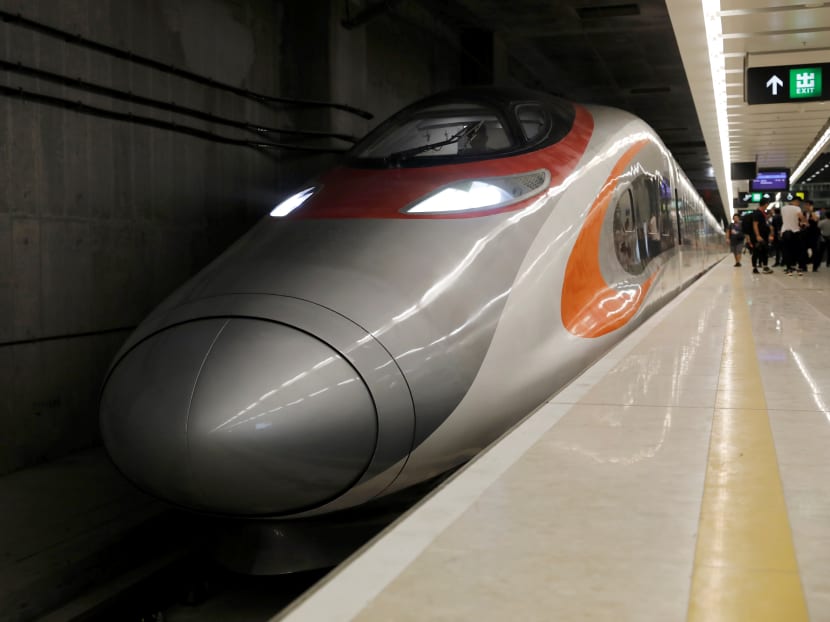
A Guangzhou-Shenzhen-Hong Kong Express Rail train is seen at West Kowloon Terminus at the first day of service of the Hong Kong Section of the Guangzhou-Shenzhen-Hong Kong Express Rail Link, in Hong Kong.

HONG KONG — After being delayed for three years and overshooting its cost estimate by a third, Hong Kong's cross-border high-speed rail link is finally set to serve its first passengers on September 23.
Critics said the 26km local section of the Guangzhou-Shenzhen-Hong Kong Express Rail risked being a white elephant; that its customs and immigration arrangements infringed the Basic Law, the city's mini-constitution. But the government said it would be profitable from the first day of operations, and perfectly legal.
Hailed as one of 10 vital infrastructure projects for Hong Kong in the early 2000s by then chief executive Donald Tsang Yam-kuen, the section was meant to be finished by 2015. It is built, maintained and run by the semi-privatised MTR Corporation.
But there have been some bumps on the line.
2014
The project had its first setback when a rainstorm exposed a significant delay at the under-construction West Kowloon terminal, which former MTR Corp projects director Chew Tai-chong knew of six months before informing the corporation's top management. The blunder prompted Chew to retire early. MTR chief executive Jay Walder also stepped down prematurely.
The corporation revealed the projected cost overran to HK$71.5 billion (US$12.49 billion), from HK$66.8 billion, while the opening date would be pushed back to 2017.
2015
The MTR Corp shocked the public by revealing that it offered Walder a HK$15.7 million payoff when he left.
The high-speed rail line met further delay and exceeded its revised budget. The projected cost snowballed to HK$84.42 billion and the commercial operation date was pushed back to the third quarter of 2018. The government would bear the cost, and received HK$25.76 billion in special dividends from the corporation, of which it is the majority shareholder.
2017
There was an outcry when the government revealed the so-called co-location arrangement at the West Kowloon terminus, which would mean mainland Chinese immigration and customs officers working at the site, and enforcing national laws.
China's top legislative body, the National People's Congress Standing Committee, endorsed the co-location plan and presented it to Hong Kong as a done deal, despite opponents questioning its legality.
The checkpoint arrangement sparked a war of words between the city's two political camps. Members of the pro-establishment camp argued the plan was legal under the Basic Law, while pan-democrats and the Bar Association said it went against the mini-constitution, which prohibits mainland Chinese law from being enforced in the city.
2018
Amid a rancorous debate, the Legislative Council passed the co-location bill. The government announced the rail line would debut on September 23.
The mainland Chinese port at the terminal was leased at HK$1,000 a year and mainland officials started working there on September 4. SOUTH CHINA MORNING POST
Stay in the know. Anytime. Anywhere.

Subscribe to our newsletter for the top features, insights and must reads delivered straight to your inbox.
By clicking subscribe, I agree for my personal data to be used to send me TODAY newsletters, promotional offers and for research and analysis.






