
Greed is not good at Xiaomi, as founder caps profit margin on its hardware business at 5 per cent
HONG KONG — Xiaomi, one of China's most valuable private companies, pledged to cap its net profit margin on its hardware business at five per cent starting this year, as part of a move by founder Lei Jun to ensure that its products remain affordable to the masses.
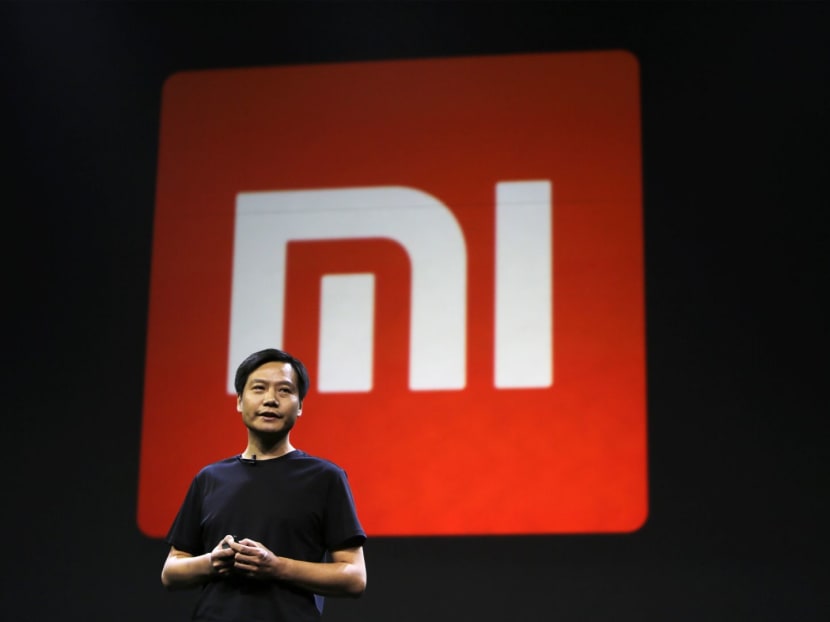
Founder and CEO of China's mobile company Xiaomi Lei Jun speaks at a launch ceremony of Xiaomi Phone 4, in Beijing.

HONG KONG — Xiaomi, one of China's most valuable private companies, pledged to cap its net profit margin on its hardware business at five per cent starting this year, as part of a move by founder Lei Jun to ensure that its products remain affordable to the masses.
The Beijing-based company's board passed a resolution to limit the margin and to distribute any excess amount "by reasonable means" to its users, according to a statement. The company offers more than 300 different products from smartphones to power banks to smart weighing machines, often co-branded with the more than 100 partners that Xiaomi invested in.
"From the beginning, we embarked on a relentless pursuit of innovation, quality, design, user experience and efficiency advances, to provide the best technology products and services at accessible prices," Mr Lei said in the statement. "We hope that our products and services will help our users to achieve a better life. We have always viewed our hardware as the gateway to providing our users with internet services, and providing value to them over time."
Up to 70 per cent of Xiaomi's sales came from seven models of smartphones, 20 per cent from scores of household and appliance products made with partners, and an estimated 10 per cent from internet services.
Xiaomi's move to publicly announce a cap on profit margin is rare among smartphone makers. By comparison, Apple's iPhone X smartphone earns a gross margin of 64 per cent, according to TechInsights, a firm that takes apart devices to analyse their components. A 5 per cent net margin puts Xiaomi's hardware business in line with the automobile manufacturing industry.
"It is quite unusual for a hardware company to make a commitment like that, and it is probably to appeal to its customers," said Kiranjeet Kaur, a senior research manager at IDC. "It has always been Xiaomi's message to its customers that they try to keep the overhead low so the products are affordable for the category that it plays in."
Ms Kaur said not many smartphone makers are currently making a lot of profit, "so if Xiaomi caps it at five per cent, I would think it is not lowering its margins to get to that point".
"This announcement also wants to highlight Xiaomi's business model to the public before its IPO," said James Yan, an analyst at Counterpoint Research.
Still, Xiaomi's profit from fee-based internet services is quite considerable, according to Mr Yan.
Xiaomi runs its MIUI operating system that comes pre-installed on its smartphones and includes many of its own apps, which provide the company with an advertising channel and revenue. The company's other sources of internet value-added service revenues mainly include video streaming services and paid subscription by users of premium entertainment content, such as online videos, online literature content and internet financial services.
Mr Lei said in an interview with the South China Morning Post last month that the company "must curb the tendency for greed and win absolute trust from consumers." He said he wanted a margin cap written in the company charter to avoid people "messing with it after 50 years".
Xiaomi has used this low-price strategy to win market share in India, where it has extended its lead over Samsung to become the top-selling smartphone brand. Now Xiaomi is bringing this cost disruption to TVs, "another consumer market that is dominated by heavyweights, such as Samsung, Sony and LG", Ishan Dutt, an analyst at Canalys, said in a release this week.
In China, Mr Lei has set an ambitious target for Xiaomi to regain its domestic smartphone sales crown in 10 quarters.
Xiaomi is planning an IPO this year that may value the company at as much as US$100 billion, according to a person familiar with the company's expectations.
"What I want to achieve is that when consumers buy the product, they can close their eyes and buy," Mr Lei said in last month's interview. "It's absolutely of high quality and absolutely at a very low price. " SOUTH CHINA MORNING POST
Stay in the know. Anytime. Anywhere.

Subscribe to our newsletter for the top features, insights and must reads delivered straight to your inbox.
By clicking subscribe, I agree for my personal data to be used to send me TODAY newsletters, promotional offers and for research and analysis.






