
Hong Kong secondary schools told to inform government how many students wear masks on first day back
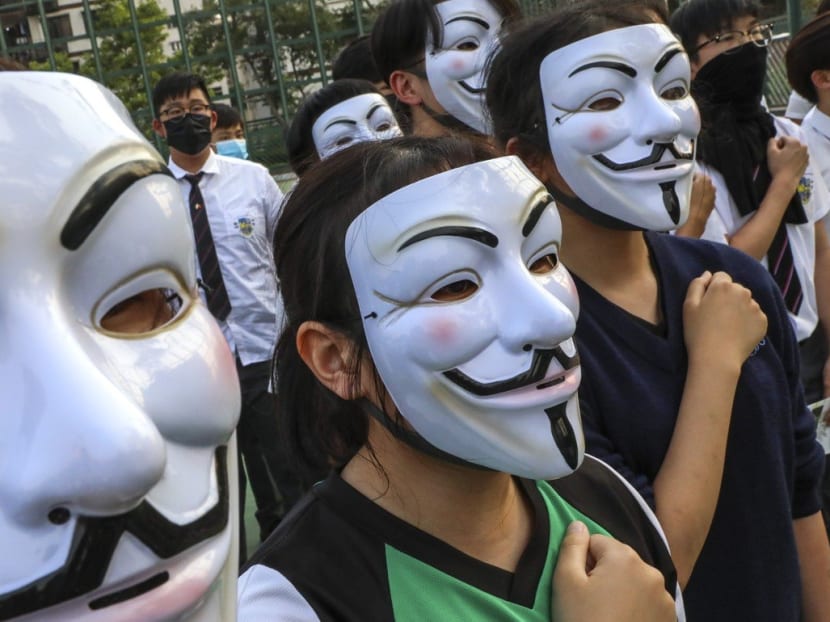
HONG KONG — Secondary school principals have been asked to tell the Education Bureau how many students boycott class or wear a mask to school on Tuesday (Oct 8), the Post has learned.
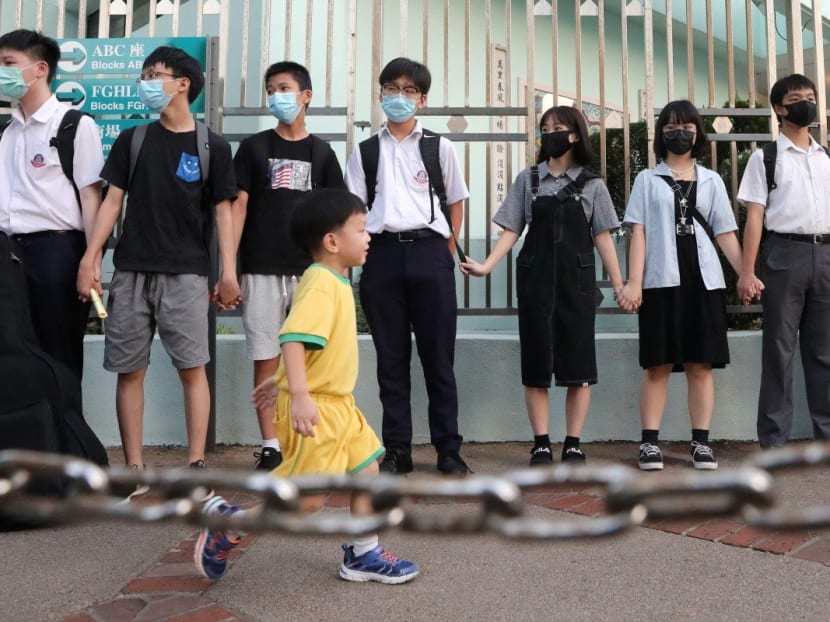
Secondary school students form a human chain in Tsuen Wan.

HONG KONG — Secondary school principals have been asked to tell the Education Bureau how many students boycott class or wear a mask to school on Tuesday (Oct 8), the Post has learned.
With a public holiday on Monday, the following day marks the return to school after a long weekend of citywide protests against the anti-mask law that came into effect on Saturday.
Two secondary school principals confirmed to the Post that the bureau had sent a message on Sunday telling them to supply information including the number of students who boycott class, wear a mask to school, and whether students are staging any non-cooperation movements.
But both principals believed the bureau was just trying to get an accurate idea of students’ latest reactions, instead of trying to monitor the internal activities at city schools.
Meanwhile, the Professional Teachers’ Union urged pupils “stay away from scenes of conflict” that have broken out since the introduction of the anti-mask law, in a statement to teachers, students and parents on Monday.
That echoed the message from the Education Bureau to schools last week, urging students to keep away from “dangerous and illegal” protests.
In a WhatsApp message sent by the bureau to secondary school principals, and seen by the Post, officials said head teachers should hand over the information on Tuesday morning via WhatsApp or phone, and asked them to make a note of students who take “abnormal leave”, as well as to record any “special incidents” at school.
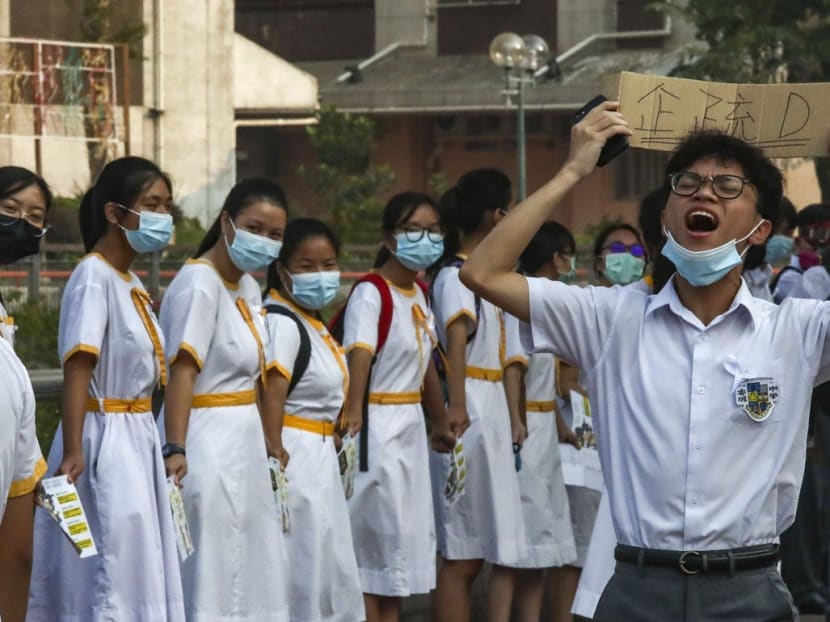
These would include students chanting slogans, staging sit-ins, and forming human chains.
The message also said if bureau officers did not receive that information by 11am on Tuesday, they would call schools for the details.
One source said principals from different school districts had received the message, but believed the main purpose of gathering such information was for the bureau to “better understand the trends” of students’ reactions to the new law.
No students’ personal data will be handed to the bureau, the source said, and he also thought the bureau would require figures for the rest of the week, with some student groups calling for non-cooperation movements over the next few days.
Last month, just after the school year began, the bureau asked secondary schools to tell it how many students boycotted class, the source said, but because there was a “calmer atmosphere” back then, it did not make it mandatory for schools to supply that information, until now.
The revelations came after the bureau issued a letter to school principals and supervisors on Friday — hours before the ban came into effect — to remind students not to wear a mask inside or outside school, unless for “religious or health reasons”.
That was criticised in some quarters as “unnecessary”, because schools were not affected by the new law, but in response the bureau said its letter was merely a reminder to students of the new law, and it “had not, and would never, collect names of students who wear a mask to school”.
Education sector lawmaker and vice-president of the Professional Teachers’ Union Ip Kin-yuen said he believed collecting student numbers was “totally unnecessary”, as it would only put more pressure onto schools.
“What does the bureau really want to achieve by collecting such figures?” he said. “And what if some of the non-cooperation movements happened solely outside school, should these events be reported as well?”
However, Wong Kwan-yu, president of the Hong Kong Federation of Education Workers, said it was a “responsible act” for the bureau to want to have a better understanding of the latest situation inside schools, adding he believed students who wore masks to school might mean they “endorse violence”. He said it was only reasonable for the bureau to get a better idea and act on it, rather than to “simply allow such acts to continue”.
In a written reply on Sunday night, the bureau said it had been contacting schools every day since the start of the new school year to understand class boycotts, and whether there were any “special incidents” to provide any help necessary.
The bureau also stressed it did not and would not collect any personal information from schools.
Last month secondary school students held at least two citywide class strikes, and staged non-cooperation movements in and outside school, including forming human chains, singing the protest song Glory to Hong Kong, and chanting slogans. Many students wore masks during those events. SOUTH CHINA MORNING POST
Related topics
Hong Kong protests schoolsStay in the know. Anytime. Anywhere.

Subscribe to our newsletter for the top features, insights and must reads delivered straight to your inbox.
By clicking subscribe, I agree for my personal data to be used to send me TODAY newsletters, promotional offers and for research and analysis.






