
Japanese company pays employees to get a full night's sleep
TOKYO — Mr Kazuhiko Moriyama is betting that well-rested workers are good for business. In fact, he is placing real money on the wager.
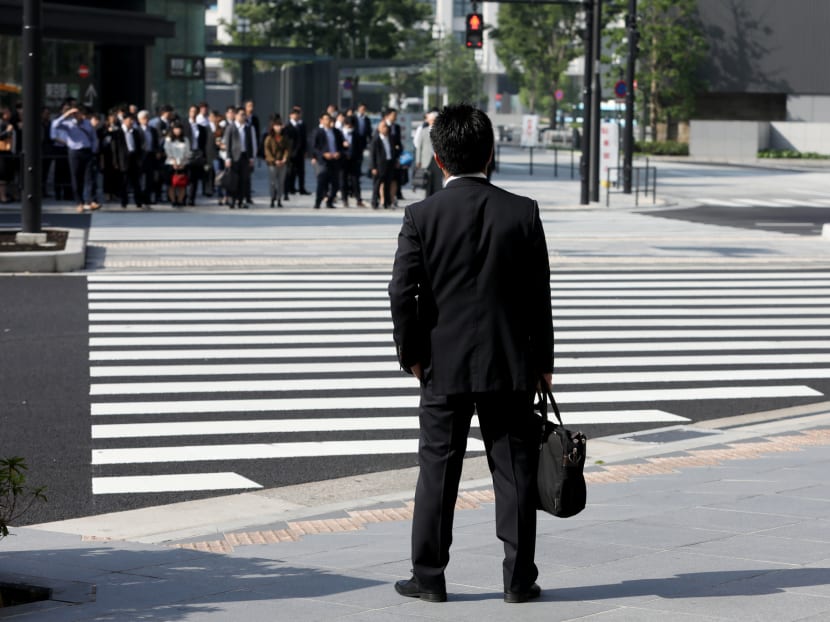
Japan has become notorious for a phenomenon called death-from-overwork.

TOKYO — Mr Kazuhiko Moriyama is betting that well-rested workers are good for business. In fact, he is placing real money on the wager.
Employees who sleep at least six hours a night, for at least five days a week, are awarded points by Crazy Inc, a wedding organiser in Japan.
The points can be exchanged for food in the company cafeteria worth as much as 64,000 yen (S$783) per year. Nightly rest will be tracked using an app made by Airweave, a mattress manufacturer.
More than 92 per cent of Japanese over the age of 20 say that they are not getting enough sleep, according to a survey by Fuji Ryoki, a health-products maker.
Thanks to a labour shortage and long-held cultural belief of noble sacrifice for the corporate good, Japan has become notorious for a phenomenon called death-from-overwork, which claimed the life of an ad agency employee in 2015.
Employees with happier lives will lead to better performance at the office, according to Mr Moriyama.
“You have to protect workers’ rights, otherwise the country itself will weaken,” Mr Moriyama said.
In addition to the sleep incentives, Crazy also promotes better nutrition, exercise and a more positive office environment.
Child support is available, as well the opportunity to take company vacations on regular business days.
There is some evidence that more sleep will lead to improved business performance and higher economic growth.
Insufficient sleep costs the US economy as much as US$411 billion (S$566.5 billion) a year, or 2.28 per cent of its Gross Domestic Product (GDP), according to a 2009 study by Rand. For Japan, the loss is estimated to be US$138 billion, or 2.92 per cent of its GDP.
“I eventually want to reach a million employees,” Mr Moriyama said. “I want to do something that other people will think is crazy.” BLOOMBERG
Stay in the know. Anytime. Anywhere.
Subscribe to our newsletter for the top features, insights and must reads delivered straight to your inbox.
By clicking subscribe, I agree for my personal data to be used to send me TODAY newsletters, promotional offers and for research and analysis.