
Malaysia forms special department to harmonise syariah, civil law
KUALA LUMPUR — Putrajaya has formed a special department to address issues relating Islam and syariah law, days after Malaysia’s apex court declared the unilateral conversion of a Hindu woman’s children to Islam nearly a decade ago by her Muslim convert ex-husband null and void.
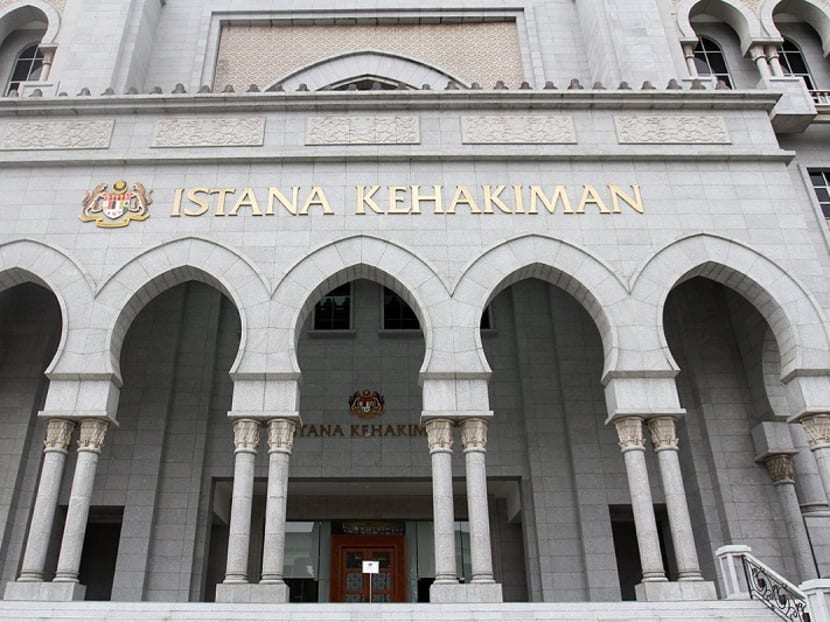
The Attorney-General’s Chambers (AGC) in Putrajaya. The AGC has formed a special department called the syariah and harmonisation law division to address issues relating Islam and syariah law. Photo: Malay Mail Online

KUALA LUMPUR — Putrajaya has formed a special department to address issues relating Islam and syariah law, days after Malaysia’s apex court declared the unilateral conversion of a Hindu woman’s children to Islam nearly a decade ago by her Muslim convert ex-husband null and void.
The Attorney-General’s Chamber (AGC) said on Friday (Feb 2) that the syariah and harmonisation law division will focus on issues “pertaining to legal advice, drafting and coordination of syariah law, ratifying an international convention which has an impact on syariah, and the harmonisation between civil law and syariah law to overcome conflicts of jurisdiction between both courts.”
The AGC said this is based on Clause (2) Article 145 of the Federal Constitution, where it is the duty of the Attorney-General to advise the King or the Cabinet or any minister on legal matters.
The AGC said the the establishment of the division is “important” as it would serve as a “focal point” on syariah-related issues.
It further added that the division would help the AGC address syariah-related issues “more effectively and in line with the current requirements”.
In a landmark ruling, the Federal Court on Monday declared that the conversion of M Indira Gandhi’s three children by her Muslim convert ex-husband in 2009 was null and void, saying that such conversions would need the consent of both parents.
The judgment is seen as a victory for ethnic and religious minorities in the Muslim-majority nation who are pushing for greater recognition of their rights, amid what critics see as growing Islamic conservatism in its government.
The ruling closed a nearly decade-old case which has seen different twists and turns, and settled once and for all the legal ambiguities related to religious conversions of minors — a controversial issue that has dogged Malaysia for years.
Until now, the unilateral conversion of minors by Muslim converts had left women with little recourse, as their complaints would be referred to a syariah court, where non-Muslims have no standing to make claims.
Muslims make up about 60 percent of a population of about 30 million, although Buddhists, Christians and Hindus account for a significant minority.
Lawyers and civil groups have welcomed the Federal Court’s ruling, saying that it sets a precedent that civil law prevails over syariah law.
A Muslim scholars’ group, however, have attacked the ruling, saying religious violence may erupt in the country if police continue hunting the ex-husband and Ms Gandhi’s youngest child, taken away by her ex-husband, Muhammad Riduan Abdullah, in 2009, when she was 11 months old.
Mr Muhammad Riduan has yet to return the child and is believed to have gone into hiding, despite a 2010 high court order that awarded Ms Gandhi custody of all three children. AGENCIES
Stay in the know. Anytime. Anywhere.

Subscribe to our newsletter for the top features, insights and must reads delivered straight to your inbox.
By clicking subscribe, I agree for my personal data to be used to send me TODAY newsletters, promotional offers and for research and analysis.






