
Malaysia’s new government struggling to clean up economic ‘mess’
KUALA LUMPUR - During 61 years of rule by the United Malays National Organisation (Umno), the government-linked companies and tycoons that dominate Malaysia’s economy learned not to bite the hand that feeds them.
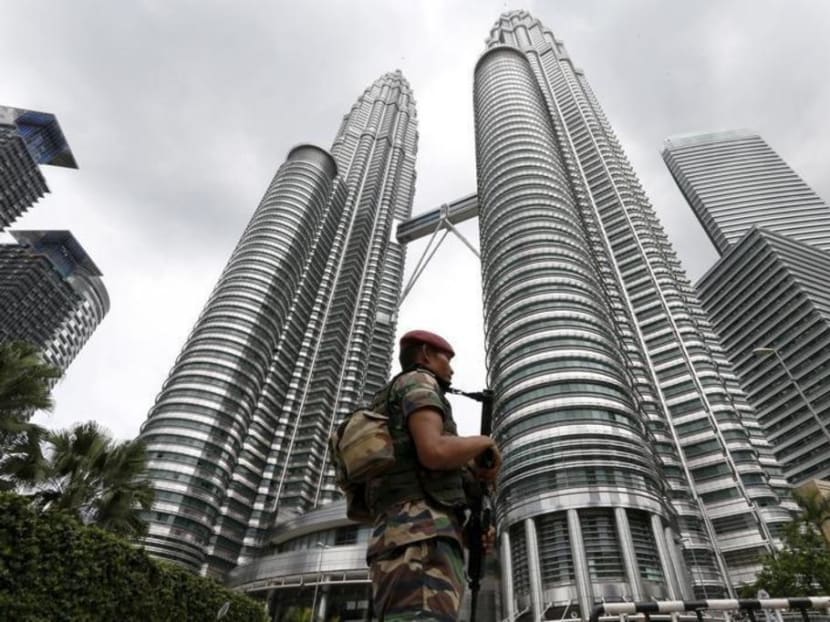
Malaysia's new Pakatan Harapan government have promised to clean up 1Malaysia Development Berhad, the graft-tainted state investment fund from which billions were misappropriated; to renegotiate or cancel multibillion-dollar infrastructure projects and to reduce spiralling government debt and tackle widespread social inequality.

KUALA LUMPUR - During 61 years of rule by the United Malays National Organisation (Umno), the government-linked companies and tycoons that dominate Malaysia’s economy learned not to bite the hand that feeds them.
Last month’s unexpected election victory by a rag-tag opposition coalition under former strongman Tun Dr Mahathir Mohamad has shaken up the delicate balance between the vested interests in this south-east Asian nation of 31 million people.
Now large state-owned companies are in a temporary freeze, tycoons such as Mr Tony Fernandes have been knocked off balance, and foreign investors are nervous about the new government’s rush to divulge details of the morass of financial problems left behind by ousted prime minister Datuk Seri Najib Razak.
“The whole economy is a mess,” said Mr Azmin Ali, the new minister of economic affairs, who was formerly chief minister of the state of Selangor, which surrounds the capital Kuala Lumpur. “I’m moving from the richest state in Malaysia to a bankrupt nation so it’s a major challenge for me to chart new policies.”
Mr Azmin and Mr Lim Guan Eng, the straight-talking finance minister, face a daunting economic in-tray.
They have promised to clean up 1Malaysia Development Berhad (1MDB), the graft-tainted state investment fund from which billions were misappropriated; to renegotiate or cancel multibillion-dollar infrastructure projects agreed with Singapore and China; and to reduce spiralling government debt and tackle widespread social inequality — while simultaneously shrinking revenues by abolishing a goods and services tax, increasing some fuel subsidies and dropping highway tolls.
Adding to the challenge, they have pledged to eradicate the cronyism that has oiled the wheels of Malaysian commerce for decades, intensifying during Mr Mahathir’s first period of rule from 1981 to 2003 and reaching its peak under Mr Najib.
“What we need now is major structural reform, (using the) principles of governance, transparency and accountability,” said Mr Azmin, a career politician who is close to both Dr Mahathir and Mr Anwar Ibrahim, the former opposition leader expected to take over as prime minister within two years.
Mr Lim, who in his previous job as chief minister of Penang helped turn the island state into a thriving centre for tourism and business, has led the charge, “kitchen-sinking” bad news about 1MDB and other financial irregularities linked to the old regime.
The new government’s populist economic policies and its stark language about the scale of the debts, which they say have risen to RM1.09 trillion (S$336 billion) or 80 per cent of gross domestic product, have unnerved some foreign investors.
But Dr Mahathir is not deterred by the initial outflows that followed his election, before easing off in recent days. “Investors will usually like to have stability, and authoritarian rulers usually provide stability,” he said. “Democracy means changes and pressures all the time.”
Few have felt these pressures more than Mr Fernandes, the founder and chairman of low-cost airline AirAsia, who came out in support of Mr Najib just before the election, only to issue an abject apology when Mr Najib lost, insisting that he had been acting under duress.
Other Malaysian tycoons who were seen as close to Mr Najib have seen their companies’ shares slump, including Mr Francis Yeoh, whose YTL Corporation won a major contract for the Kuala Lumpur-Singapore high-speed rail project that was launched in 2013 by Mr Najib and axed on May 28 by Dr Mahathir.
The return of Dr Mahathir has, however, been good news for Mr Robert Kuok, the 94-year-old known as the “sugar king”. The Hong Kong-based billionaire was attacked by Mr Najib before the election but has been appointed to the new prime minister’s advisory council.
Mr Kuok will play a key role in smoothing relations with Beijing as Mr Mahathir tries to renegotiate a series of Chinese investment projects that he has deemed poor value for money.
Executives at the swath of government-linked companies, or GLCs, that dominate the economy, making up more than up half of the main stock market index by market capitalisation, are also facing uncertainty, from oil and gas producer Petronas to banks such as CIMB, which is chaired by Mr Najib’s brother Nazir Razak.
“Nothing is moving right now,” said one adviser to several large GLCs. “The GLCs are in a freeze while the new government works out what it wants to do with them.”
Some political appointees at major GLCs, such as the chairman of the US$17 billon (S$22.69 billion) haj fund, which helps Muslims save for the pilgrimage to Mecca, have already left their jobs, as part of a broader housecleaning that has also seen the departure of the heads of the central bank, the attorney-general’s office and the Malaysian Anti-Corruption Commission.
Despite some bankers’ hopes that the new government might pursue a privatisation programme, Mr Azmin said the initial focus would be on improving governance and removing political pressures on GLCs, rather than an ownership shake-up.
But Mr Greg Lopez, a lecturer in Malaysian politics at Murdoch University in Australia, warned that with the opposition never having been in power before, the new government would come under pressure to reward some of its supporters through the GLCs and government procurement.
He argued that an even bigger challenge would be promoting innovation and private-sector job growth, given the “crowding-out” effect of the GLCs, which are dominant in many sectors, from banking to property and telecoms.
“Beyond managing competition for government favours domestically, how will they generate new employment opportunities?” he asked. FINANCIAL TIMES
Stay in the know. Anytime. Anywhere.

Subscribe to our newsletter for the top features, insights and must reads delivered straight to your inbox.
By clicking subscribe, I agree for my personal data to be used to send me TODAY newsletters, promotional offers and for research and analysis.






