
Mother-baby coronavirus transmission yet to be proven, doctor says
HONG KONG — A Chinese obstetrician has warned people against jumping to conclusions about the risk of pregnant women infected with the coronavirus passing it on to their unborn children, after a newborn in Wuhan, the city at the centre of the outbreak, tested positive for it.
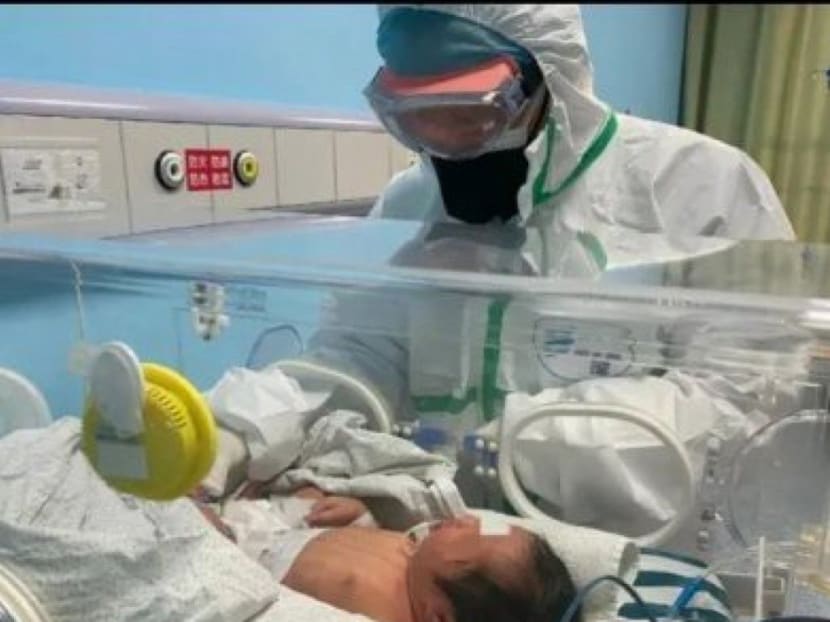
A Chinese obstetrician has warned against overstating the risk of pregnant women passing the coronavirus on to their unborn children.

HONG KONG — A Chinese obstetrician has warned people against jumping to conclusions about the risk of pregnant women infected with the coronavirus passing it on to their unborn children, after a newborn in Wuhan, the city at the centre of the outbreak, tested positive for it.
“We cannot say right now that there is mother-baby vertical transmission because the number of cases is too few,” said Dr Qiao Jie, a doctor from Peking University Third Hospital in Beijing who is now helping to combat the contagion in the central China city.
“But also we don’t dare say there is not one,” she said in an interview with state broadcaster CCTV.
The television report came after tests carried out on a baby 36 hours after its birth at Wuhan Children’s Hospital confirmed it was infected with the coronavirus.
The results sparked concerns that the pathogen was passing from mothers to their babies either in the womb or through their breast milk, a process known as vertical transmission.
The CCTV report said that the infant had a minor liver dysfunction, a lung infection and some problems breathing, but its vital signs were stable and it did not have a fever or a cough. It did not specify the child’s gender.
Dr Qiao said that after being delivered by caesarean section, the baby was moved to a paediatrics ward. The viral infection was confirmed by a throat swab test conducted a day and a half later.
“It was 36 hours after the delivery, so the baby had had contact with other people,” she said.
“Fortunately, tests were also performed [much earlier] on the [baby’s] placenta and blood from the umbilical cord and they came back negative.”
Dr Qiao said that she and her team had carried out throat swab tests and umbilical cord blood tests on 10 babies born by caesarean section in Wuhan to women known to be infected with the coronavirus, and they had all come back negative.
Tests on the mothers’ breast milk also showed no signs of infection, she said.
Similar investigations had been carried out by other teams on a further 20 newborns at the time of their delivery – all by caesarean section – and these too had come back negative, she said.
“So far, there is only one case, but the test was done 36 hours after the birth, therefore we cannot say with certainty [it was] mother-baby transmission,” Dr Qiao said.
Dr Zeng Lingkong, a doctor in the neonatal department at Wuhan Children’s Hospital, said in the CCTV report that confirmation of the baby’s infection showed “we should be concerned about the possible new transmission route of the coronavirus”.
Dr Chen Zhimin, an expert in respiratory disorders at Zhejiang Children’s Hospital, said last week that while it was possible for mothers to pass their infections on to their babies, “[as yet] we don’t know whether there is vertical transmission. We haven’t ruled out the risk”.
Since the coronavirus outbreak was first reported in December, more than 28,000 people have been infected by it and more than 560 killed. SOUTH CHINA MORNING POST
Related topics
Wuhan virus coronavirus China pregnant babyStay in the know. Anytime. Anywhere.

Subscribe to our newsletter for the top features, insights and must reads delivered straight to your inbox.
By clicking subscribe, I agree for my personal data to be used to send me TODAY newsletters, promotional offers and for research and analysis.






