
The origins of siew mai: How an iconic dim sum staple came to be
HONG KONG — Hong Kong's street food scene comes alive after dark. As the sun sets, workers stream out of offices and flock to the city's holes-in-the-wall for a quick bite.
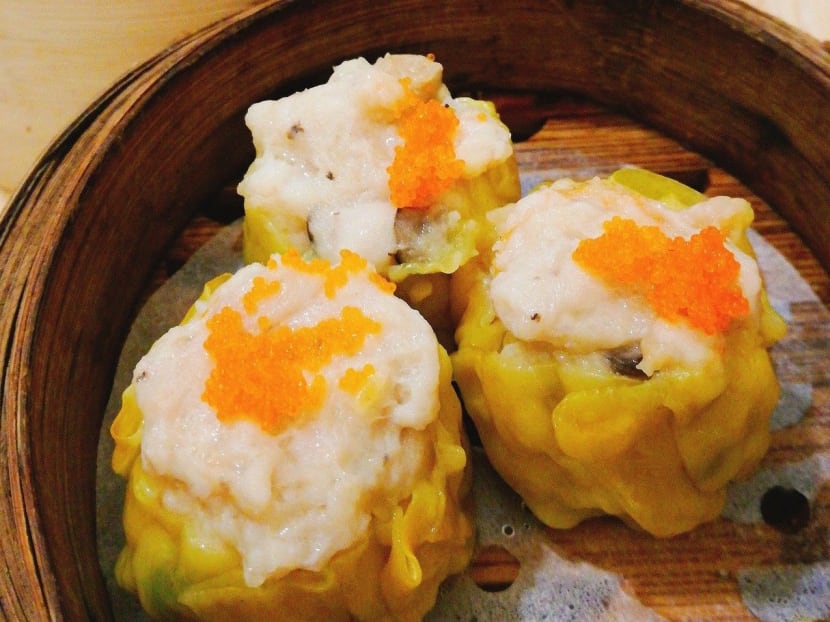
In Hong Kong, siew mai can be found everywhere, from street stalls to high-end dim sum restaurants. For people on the go, it's a convenient snack, which is why it can even be found at 7-Eleven convenience stores.

HONG KONG — Hong Kong's street food scene comes alive after dark. As the sun sets, workers stream out of offices and flock to the city's holes-in-the-wall for a quick bite.
In Tuen Mun, a suburban neighbourhood in the northwestern reaches of Hong Kong, a line forms outside Yue Lai Lao Zhu Snacks, a nondescript storefront on a busy street.
Most of the people are commuters stopping by on their way home from work. They've come to grab a box of the store's speciality: Siew mai — or siu mai — a steamed dumpling made with pork, shrimp, mushrooms and, sometimes, fish paste.
Among siew mai fanatics, Yue Lai Lao Zhu is the gold standard in Hong Kong. The proprietor, Mr Patrick Chu, opened the shop in 2001, making siew mai based on his father's recipe.
The dish is a street food staple, easily identified by its yellow outer skin and tiny orange garnish, usually made with crab roe or carrots. It's typically enjoyed dipped in chilli oil and soy sauce.
In Hong Kong, siew mai can be found everywhere, from street stalls to high-end dim sum restaurants. For people on the go, it's a convenient snack, which is why it can even be found at 7-Eleven convenience stores.
"Siew mai is part of Hong Kong people's lives," Mr Chu says.
Although the Cantonese version is now the most familiar version of siew mai, many historical records say the dish actually originated further away in Hohhot, the capital of China's Inner Mongolia autonomous region.
There, it was known as suumai, which translates to "without being cooled down" in Mongolian. It's said to describe how people should eat it while it's still hot. Instead of pork, suumai consisted of a mutton filling with scallion and ginger.
Mr Chu has another story for where the name siew mai comes from. "I think what the chef meant by suumai was that he wanted them to sell like hot cakes," Mr Chu says. In Chinese, siew means "burn" and mai means "sell."
Today, there are different varieties of siew mai around the world, in Japan, Indonesia, the Philippines and Vietnam, as well as many parts of China. They differ in the type of meat, spices and aromatics used.
In the Philippines, for example, one can find siew mai stuffed with ground pork, beef or shrimp, and combined with green peas, carrots and garlic.
Hong Kong takes its street food seriously, which is why Chu is particularly proud that his little shop has carved out a spot among the siew mai-obsessed.
Regulars say his siew mai are softer and twice the size of average siew mai. Mr Chu says it lets customers enjoy it "bite by bite" rather than eating it whole, as most siew mai is consumed.
Mr Chu's dumplings have a blended filling. Fresh fish is grounded into paste, which is then mixed with minced pork. The recipe comes from his father, who developed it after decades of working in different kitchens.
"The siew mai I make today is the one he would have enjoyed," Mr Chu says. "But I can never surpass his skills and human touch."
Still, he tries and continues to serve the siew mai fanatics who flock to his store for Hong Kong's quintessential street snack. SOUTH CHINA MORNING POST
Related topics
siew mai Dim Sum food Hong Kong dumplingStay in the know. Anytime. Anywhere.

Subscribe to our newsletter for the top features, insights and must reads delivered straight to your inbox.
By clicking subscribe, I agree for my personal data to be used to send me TODAY newsletters, promotional offers and for research and analysis.






