
Parents, teachers in Malaysia welcome end to streaming
KUALA LUMPUR — When the new school term in Malaysia opens in January, Nurulazila Ismail is confident that her child, who has always been relegated to the “weak” class in school, will enjoy a boost in confidence, thanks to the removal of streaming in all public schools.
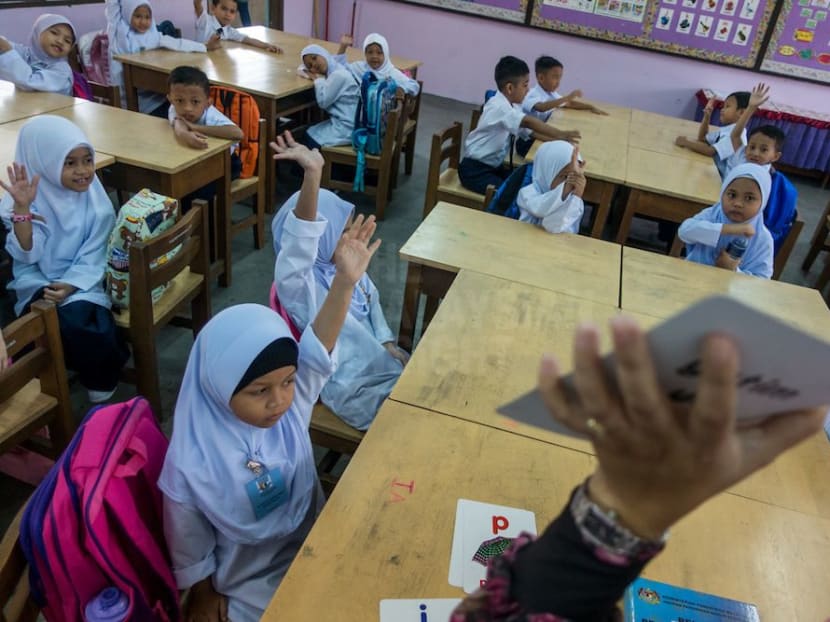
Starting January 1, the Education Ministry is ending the decades-old practice of separating schoolchildren according to academic ability.

KUALA LUMPUR — When the new school term in Malaysia opens in January next year, Nurulazila Ismail is confident that her child, who has always been relegated to the “weak” class in school, will enjoy a boost in confidence, thanks to the removal of streaming in all public schools.
She also believes that her son has an equal chance at succeeding now that he is able to play and befriend children of all academic abilities.
“As a mother, we don’t want to see our children left behind.
“If you’re in a ‘weak class’, it’s as if there is discrimination. If you enter a mixed class, I am certain it will be a healthier environment,” she told The Malaysian Insight.
Two of her six children are currently in the “weak class”, three are in the mid-level class while one child is in the express class. Ms Nurul said her academically inclined child is more motivated to learn and study.
“For children to want to study, they are encouraged by peer influence. If their friends are hard working, they will follow suit,” said the mum from Gombak, Selangor.
The Malaysian Education Ministry abolished the streaming system starting from the new academic year.
Director of education Dr Amin Senin said the directive is an attempt to reduce the achievement gap between schoolchildren.
Another parent, Dr Nurul Kharmila Abdullah, said class streaming is understandable at the secondary level where pupils face major examinations.
“(But) for early education, there is no need for segregation. Teach them to help each other,” said the lecturer.
“If there is a national examination, then they need to pay greater attention and maybe then we can separate them.”
From her experience of helping to teach extra classes for weaker pupils, many parents disliked having their children separated from the high achievers, she said.
“Parents of children who are weak in their studies are offended because they think that their children will not get a good teacher in a weaker class.
“So even if there is streaming, it has to be that the best teacher is assigned (to the weak class),” she said.
The National Union of Teaching Profession (NUTP) of Malaysia welcomed the move, saying that streaming classes according to academic achievements did not promote unity and integration in schools.
“At the primary school level, much of the syllabus involves group work and if the pupils mix around, then moral values can be fostered,” said NUTP president Kamarozaman Abd Razak. THE MALAYSIAN INSIGHT
Stay in the know. Anytime. Anywhere.

Subscribe to our newsletter for the top features, insights and must reads delivered straight to your inbox.
By clicking subscribe, I agree for my personal data to be used to send me TODAY newsletters, promotional offers and for research and analysis.






