
‘The work here is so purposeful’: Singaporean youths who left home to help genocide survivors in Iraq
ZAKHO, Iraq — At a refugee camp in Zakho, a small city near the border between Iraqi Kurdistan and Turkey, Ms Jacinth Toh thought hard about how she feels taking a year out of her life to serve the survivors of a massacre eight years ago.
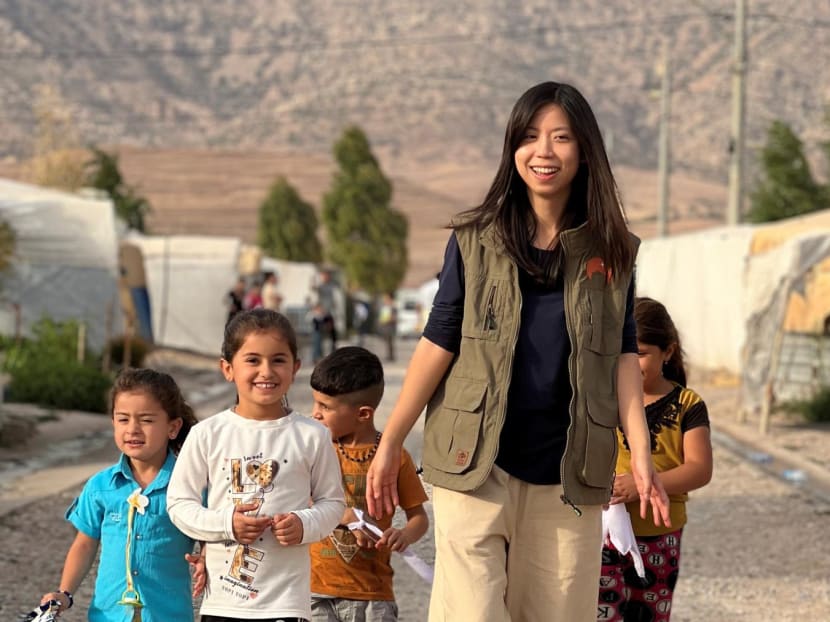
Ms Heidi Tan, director of operations at Habibi International, a humanitarian organisation founded by Singaporean Willy Tan. She is pictured with children from a refugee camp for Yazidis in northern Iraq.

- Two young Singaporeans speak to TODAY about why they decided to fly to the northern Iraqi city of Zakho to help refugees
- They work at Habibi International, a humanitarian organisation founded by Singaporeans to serve Yazidi refugees
- The refugees belong to a minority group that was targeted by Islamic State militants in a 2014 massacre
- They were speaking to TODAY during a filming of CNA's On The Red Dot programme featuring Singaporeans living in remote and unusual places


ZAKHO, Iraq — At a refugee camp in Zakho, a small city near the border between Iraqi Kurdistan and Turkey, Ms Jacinth Toh thought hard about how she feels taking a year out of her life to serve the survivors of a massacre eight years ago.
The 26-year-old Singaporean was volunteering in the city, located a few kilometres from the Turkish border in the Kurdish autonomous region of northern Iraq, for two months but said she is planning to return for a year-long trip in the near future.
“A few years ago, I would have asked myself: My friends have gotten their BTO (Build-to-Order) flats and are married. Will I be left behind?” she said.
“But the work here is so purposeful that I don’t feel left behind. In fact I’m adding more years to my life.”
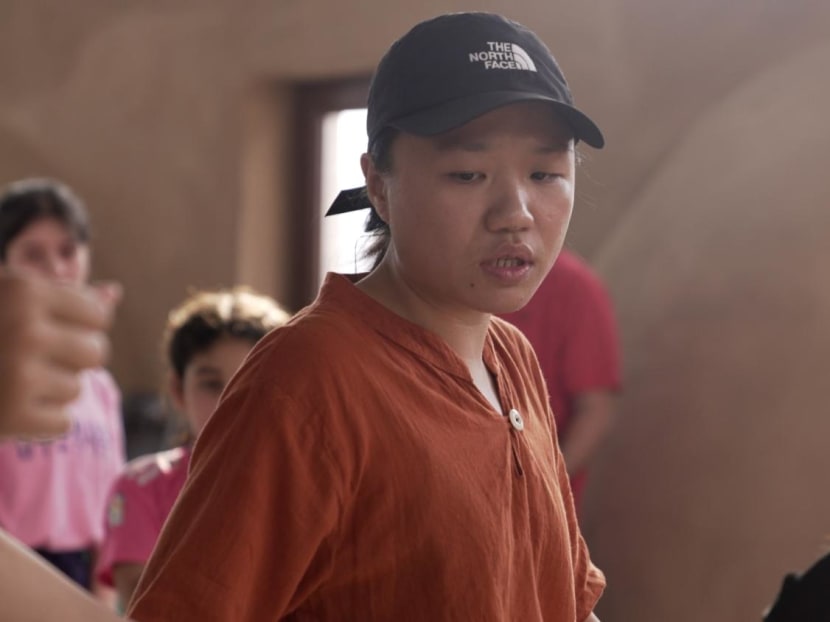
Ms Toh was speaking to TODAY in September during a filming of CNA’s On The Red Dot programme featuring Singaporeans living in remote and unusual places.
It was her second trip to Zakho with Habibi International, a humanitarian organisation co-founded by Singaporean Willy Tan serving some 50,000 refugees and internally displaced persons living in camps.
The inhabitants of the refugee camps served by Habibi are Yazidis, an ethno-religious minority in Iraq.
The Yazidis are considered by some to be a sub-group of the Kurdish people who have long sought to establish a homeland in a territory that includes part of Iraq, Iran and Turkey.
In 2014, militants from the Islamic State, which considers them devil-worshippers, killed and abducted thousands of Yazidis from their homeland. The United Nations has described the assault as genocide.
At the height of the crisis, there were many other non-governmental organisations providing aid to the community, Mr Tan, 56, told the television programme. But most have left to deal with other disasters and Habibi is one of the few that remained.
Habibi provides medical and dental services to Yazidi refugees, who are often denied healthcare, Mr Tan said. The organisation also runs educational programmes for women and youth.
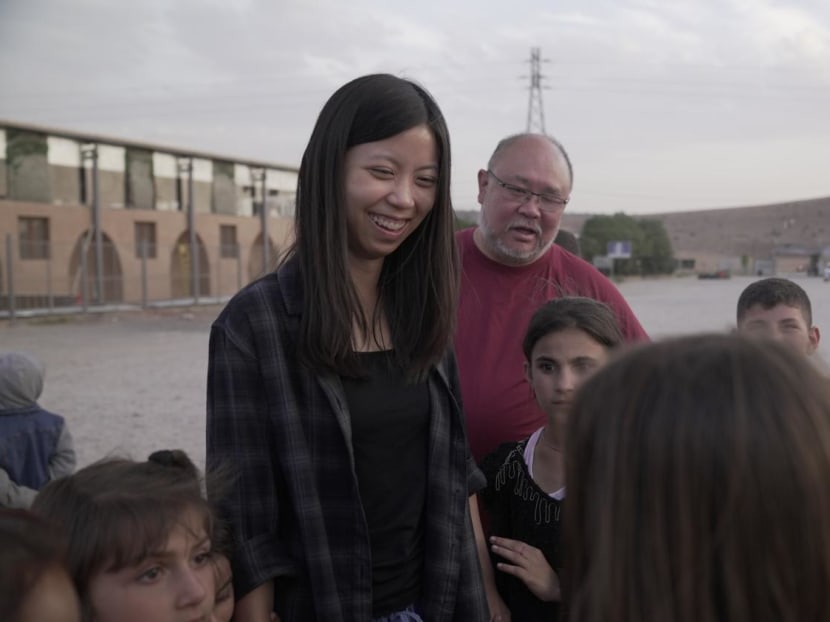
In an interview with TODAY, Mr Tan said that many young Singaporeans come to Zakho bringing their own lenses to view the new country.
“One of my primary jobs is to help them see through a different socio-economic and cultural lens, to see people we are here to serve in a more intimate, meaningful way,” he said.
So far, all of the young Singaporeans who have volunteered for Habibi have said they would like to visit again, Mr Tan added.
He said that younger volunteers "bring value" as they are more energetic and connect with young, local people more easily. For example, sharing a common interest in social media helps volunteers communicate with young locals, said Mr Tan.
Since 2018, Singapore’s Ministry of Foreign Affairs has advised Singaporeans not to travel to Iraq due to the “unstable security situation”.
In March this year, missiles hit Erbil, the capital city of Iraqi Kurdistan, the day before Ms Toh was due to fly.
“I didn’t tell my mum, otherwise she wouldn’t allow me to go,” she said. She went on her flight as scheduled.
STAYING FOR THE LONG HAUL
Many of the Singaporeans in Zakho are like Ms Toh, volunteers who stay for about two weeks to six months.
But a small team of five work full time at Habibi in a rented building in Zakho. One of them was 34-year-old Heidi Tan, Habibi’s director of operations, who is staying for the long haul.
“Right now, I feel like our hands are full and there’s a lot to be done,” said the former primary school English teacher turned civil servant.
Why leave the comfort of home and seemingly stable career to work in Iraq for a small stipend that is only enough to cover her room and board?
Ms Tan told TODAY that she has always felt a yearning for the Middle East and was exploring opportunities in refugee work.
In 2019, she took a sabbatical to find work in the Middle East serving refugees, which led her to meet Mr Tan.
Her first stint with Habibi was in 2020, for five months in the thick of the Covid-19 pandemic. She returned in July 2021 and has stayed in Iraq since.
As the operations director, she is involved in almost every project Habibi runs, from handling government paperwork to human resources.
Ms Tan, who had previously volunteered with low-income people and refugees in other countries, said that she had considered deeply before making the decision to stay on for the long term.
She recounted a meal with her junior college classmates where they were discussing their corporate jobs and buying cars and condominiums shortly after making her decision to move to Iraq.
She said that was when she realised "it was not the life (she) would feel fulfilled by".
A NEW OUTLOOK ON LIFE
Ms Toh said her work at Habibi has given her a new perspective on life. She recalled an incident when she was visiting a local bookstore with a friend and the shopkeeper offered them a drink.
“I whispered to my Singaporean friend, ‘I think he offered us a drink because he wants us to buy’.”
It was only later on that another girl who had been in Zakho for longer helped her realise that her impression of the shopkeeper was shaped by her own worldview, Ms Toh said.
“In fact, the man just wanted to honour us as guests and just be hospitable,” she added. "We put people in boxes based on what we think of them but they are so much more than we box them up to be.”
Ms Tan said that she has found it "a bit more difficult" to connect with people whenever she returns to Singapore.
"The Middle East or refugee issues are rather far-removed from the typical Singaporean's consciousness — and understandably so," she said.
For most Singaporeans who are unable to fully emphathise with those who are forcibly displaced, Ms Tan said it can be helpful simply to pay attention to people around them whose work are often "invisible" to many, such as the security guards, cleaners and construction workers.
She acknowledged that not everybody has the means to venture overseas to work or do volunteer work.
"Personally, I believe that there is a larger picture where we all have different roles which also may change in seasons of life, but it is perhaps more important to love and be intentional with others wherever we are, including at home."
With assistance from Daniel Heng.
Watch this episode of On The Red Dot here. The programme airs on Mediacorp Channel 5 on Fridays at 9.30pm.
Related topics
refugees genocide humanitarian reliefStay in the know. Anytime. Anywhere.

Subscribe to our newsletter for the top features, insights and must reads delivered straight to your inbox.
By clicking subscribe, I agree for my personal data to be used to send me TODAY newsletters, promotional offers and for research and analysis.






