
Taiwan president Tsai calls on international community to act on Hong Kong’s ‘loss of control’
SINGAPORE — With the stand-off between protesters and the police in Hong Kong turning bloodier by the days, Taiwan president Tsai Ing-wen said that the international community who values freedom and democracy should be concerned over Hong Kong’s out-of-control situation and take action.
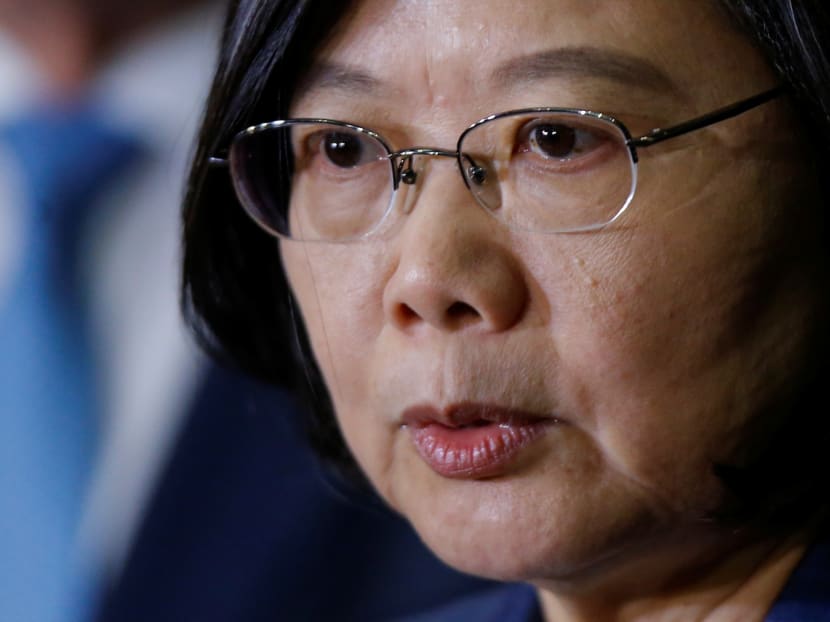
Taiwan president Tsai Ing-wen (pictured) called on other countries to stand up for Hong Kong and intervene, stating that Hong Kong's freedom and the rule of law are being eroded by authoritarianism.



SINGAPORE — With the stand-off between protesters and the police in Hong Kong turning bloodier by the days, Taiwan president Tsai Ing-wen said that the international community who values freedom and democracy should be concerned over Hong Kong’s out-of-control situation and take action.
Her comments, written in Chinese on Facebook on Wednesday (Nov 13), came after a night of violent clashes within the Chinese University of Hong Kong, which saw a pitched battle involving tear gas and rubber bullets from the police, and petrol bombs from student protestors.
The Hong Kong Education Bureau said that all schools, including kindergartens, will stay shut on Thursday and their classes suspended for “transportation and safety reasons”.
The protests in Hong Kong, a Special Administrative Region of China, have continued for more than five months, but the latest escalation came after the death of a teenager on Monday morning.
Hong Kong police warned on Tuesday that the rule of law has been pushed to the "brink of total collapse".
Ms Tsai said that the university scene resembled a brutal period in Taiwan’s past. The island had been placed under martial law from 1949 to 1987, a period which saw a violent suppression of anti-government protests and the deaths of thousands as a result.
She described this period as its “age of white terror”.
“Taiwan, too, had experienced incidents of military police rushing into schools, beating students, and suppressing freedoms, and these are painful memories that we do not want to witness again,” she wrote.
“Taiwan had stepped out of this darkness after much difficulty, yet Hong Kong has walked right into it.”
Ms Tsai, a member of Taiwan’s ruling Democratic Progressive Party, then said that the police exist to protect citizens and the government exists to serve the people, but warned that Hong Kong leaders may have lost sight of their purpose.
“When the police no longer protects them and the government no longer thinks about the people, such a government will certainly lose the trust of the people,” she added.
“With profound grief, I want to call on the Hong Kong government to pull itself back from the brink. The people's voice should not be answered with violence.”
She called on other countries to stand up for Hong Kong and intervene, stating that Hong Kong's freedom and the rule of law are being eroded by authoritarianism. “Do not sacrifice the blood of young people in Hong Kong to beautify the face of the Beijing authorities,” she wrote.
Within a few hours, Ms Tsai’s post was rebutted by Beijing’s Taiwan Affairs Office. Its spokesperson Ma Xiaoguang said that the Democratic Progressive Party was using the situation in Hong Kong for its own political gain.
Alluding to an incident on Monday where a pro-Beijing man was set on fire by protestors whom the man confronted, Mr Ma said: “We urge them to carefully read the full statements from the Hong Kong government and police, to open their eyes to look at the images of rioters in the streets burning ordinary citizens, and not to continue reversing black and white for political gain and misleading the public.
“What they should do is to immediately take back the black hands they have outstretched to Hong Kong.”
Related topics
Taiwan Tsai Ing-wen Hong Kong protest unrest violence law government police ChinaStay in the know. Anytime. Anywhere.

Subscribe to our newsletter for the top features, insights and must reads delivered straight to your inbox.
By clicking subscribe, I agree for my personal data to be used to send me TODAY newsletters, promotional offers and for research and analysis.






