
Telemedicine catches on in Japan
TOKYO — As Japan’s populace ages, the demand for doctors and the important medical services they deliver is increasing, and the country is increasingly turning to the internet and in-home technology to overcome the challenge.

TOKYO — As Japan’s populace ages, the demand for doctors and the important medical services they deliver is increasing, and the country is increasingly turning to the internet and in-home technology to overcome the challenge.
The use of devices and home technology in remote medical consultations has gradually increased since Japan fully lifted its restrictions on the provision of such services in 2015. The trend was given a further bump this month when hospitals were allowed to increase the amount of revenue they can raise in the area.
The Health, Labor and Welfare Ministry says roughly 560 medical institutions across Japan have introduced online consultations and some 16,000 patients had used the services as of 2014.
Yano Research Institute, a market research company in Tokyo, says the value of the telemedicine market in the country is expected to hit 19.9 billion yen (S$246.5 million) in fiscal 2019 from 12.2 billion yen in fiscal 2015.
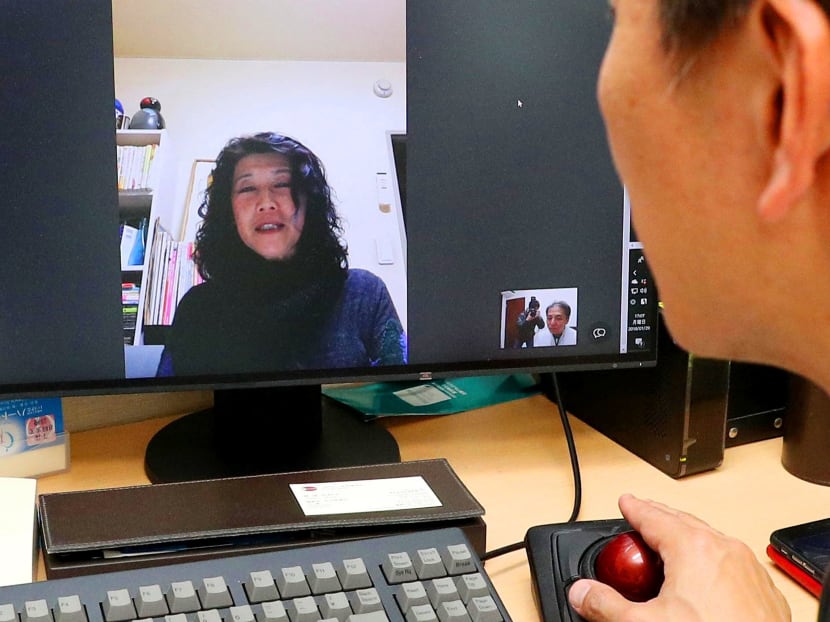
In January, a doctor at a heart clinic in Tokyo’s Katsushika Ward, Kazuki Sato, asked his 61-year-old patient with high blood about her health.
The patient, Naomi Kitamura, showed him a chart compiled from blood pressure checks she had performed at home, and the doctor replied, “It looks stable and fine.”
Ms Kitamura uses her smartphone to have an online consultation with Dr Sato. The phone both notifies her when the appointment is about to start and then allows her to have a video call with her doctor.
“I don’t feel strange about talking with him using a screen,” Ms Kitamura said. “Since I have a job and need to take care of my mother, this is really helpful because it saves me time given I don’t actually have to go to the hospital.”
Dr Sato began offering online consultations last year for patients who he determined are stable enough to not always need to be seen in person.
“Patients who do not notice their symptoms tend to (decide to) stop taking medicine on their own and their condition sometimes worsens as a result,” he said.
Being able to stay in touch with patients easily and quickly online means patients are less likely to make decisions that prove detrimental to their treatment.
Dr Sato also points out that using technology to remotely consult with patients lessens the risk of infection, a chance that is heightened when they visit a hospital.
Makoto Kitada, director of Shinroppongi Clinic in Tokyo’s Minato Ward, said telemedicine is useful for patients who suffer from social withdrawal or panic disorders. Talking to their doctor online means they can avoid taking public transport which can trigger their afflictions.
Lifestyle-related conditions generally suit treatment through telemedicine. Patients with high blood pressure and diabetes, depression and other mental diseases, hay fever, sleep apnea syndrome, as well as those wanting to renew their birth control pill prescription can benefit, according to Medley Inc.
The Tokyo company is among a number of businesses that are trying to capitalise on the burgeoning telemedicine business. It provides an online system which allows patients to make telemedicine appointments with about 800 hospitals nationwide.
Patients reserve their online consultation with a doctor using their computer or on the company’s smartphone app. Prescribed medicines or the prescriptions themselves are sent to the patients after the appointment and the patients pay online.
In Japan, telemedicine was permitted to be practiced for patients on remote islands or in rural areas in 1997. The restrictions were lifted in 2015, and now people anywhere can take advantage of the internet to get treatment.
To promote better health among its rapidly aging population, Japan plans to encourage the use of technology, including telemedicine, and the use of care-giving robots.
As part of the efforts, the health ministry raised telemedicine treatment fees hospitals could charge health insurers by updating the country’s medical fee system.
Hiroaki Kato, a specially appointed assistant professor at Kyoto Prefectural University of Medicine, warned, however, that “online consultation is not designed to attract more patients from afar or to treat more patients in an efficient way.”
“I have no doubt that telemedicine will increase further in the coming years,” Kato said. “It may benefit patients, but we must keep in mind that online consultations are based on less information than an in-person visit and should be introduced solely as a complementary treatment.”
The ministry formulated guidelines in late March. It says a patient’s first consultation should be face-to-face and measures should be taken to prevent the security of personal data. KYODO NEWS
Stay in the know. Anytime. Anywhere.

Subscribe to our newsletter for the top features, insights and must reads delivered straight to your inbox.
By clicking subscribe, I agree for my personal data to be used to send me TODAY newsletters, promotional offers and for research and analysis.






