
Travel to the edge of space in a balloon for price of S$222,000
HONG KONG — A start-up in Sapporo, Hokkaido, hopes to popularise high-altitude travel by sending people into the stratosphere in a helium balloon from Japan’s northernmost main island, enabling them to view a stunning spectacle of Earth from above.
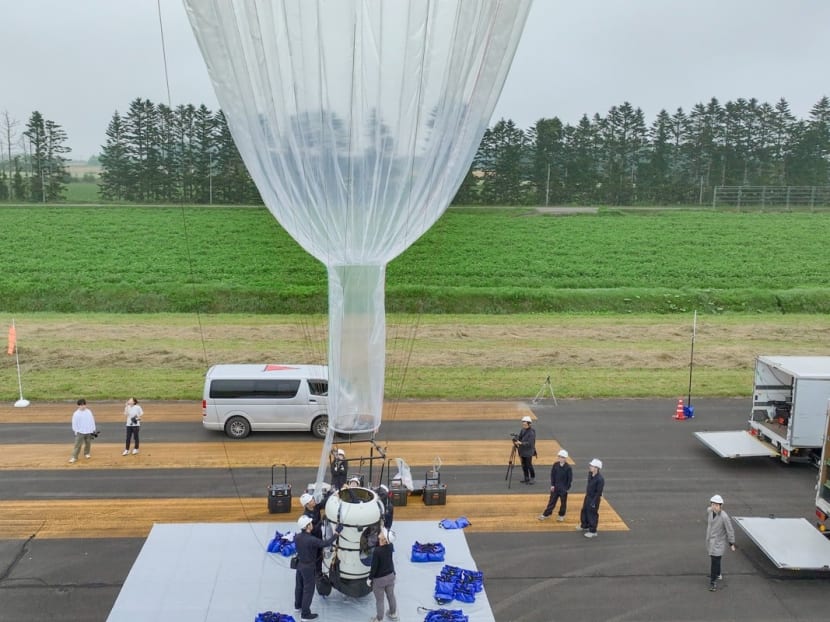
Japanese start-up Iwaya is promising stunning views of Earth – from a helium balloon – for people willing to pay S$222,000.

HONG KONG — A start-up in Sapporo, Hokkaido, hopes to popularise high-altitude travel by sending people into the stratosphere in a helium balloon from Japan’s northernmost main island, enabling them to view a stunning spectacle of Earth from above.
In a manned test flight in late-July, the balloon reached a record-high altitude of 6km. It is expected to attain its final target, a height of 25km, by the end of 2023.
Iwaya, which started the project, says that if the balloon can reach such an altitude, it will be possible soon for customers to view the blueness of the Earth below and the darkness of space above on their journeys. However, such a journey will not come cheap for the average customer.
In the morning haze of July 23, the helium-powered balloon quietly lifted off from Iwaya’s testing site in the district of Tokachi in Hokkaido.
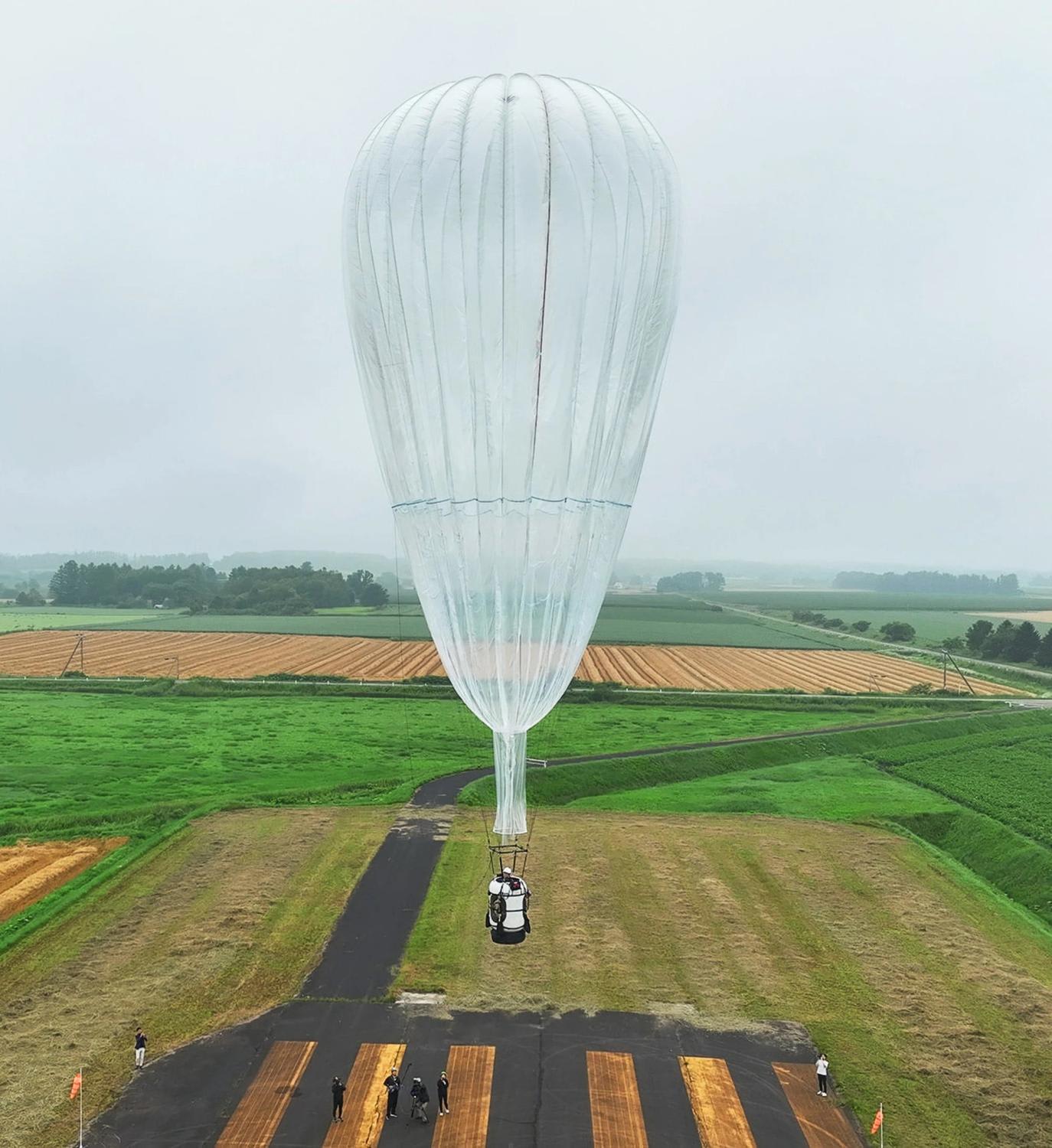
Mr Akihito Oikawa, 35, and part of the start-up’s space development section, was inside the single-seat cabin 1.1m wide and 1.5m high, which hangs below the balloon, as it immediately rose into the air and out of sight.
After reaching a height of 6,072m, gas was released and the balloon descended. Roughly two hours later, Mr Oikawa landed in a field 26km away from the launch site.
The test flight was the venture’s first manned attempt to reach an altitude of 6km. The balloon, which is some 25m in height measured from the bottom of the cabin, can reach an altitude of 11km.
Because breathing becomes difficult at an altitude of over 4km, the airtight cabin is made of special plastics resistant to outside air pressure and temperatures.
The craft is equipped with a machine capable of sustaining those inside by maintaining a breathable atmosphere, through controlling components such as the cabin’s oxygen and water vapour levels.
Iwaya says it will be able to achieve an even greater altitude with a larger balloon.
“We have had all our technologies verified for a balloon and a cabin capable of achieving a height of 25km,” a company executive said.
Iwaya was founded in April 2016 by Mr Keisuke Iwaya, 37, who studied aerospace engineering at Hokkaido University with the goal of making “near-space tourism by balloon” a reality.
More than 35 of the company’s employees have flown aboard the craft for flight training and data collection.
While outer space is generally considered to be at an altitude exceeding 100km, the “spectacle of the blue Earth” can be observed from the stratosphere at 25km altitude, the company said.
Iwaya has already begun accepting applications from the public for high-altitude tours. It is planning to conduct its first commercial flight by March 2024.
Although a four-hour ride will cost 24 million yen (S$222,000) per passenger, the company says it has received applications beyond its expectations.
Successful applicants are likely to be announced in early October and to receive an orientation in November and December.
While space travel is generally the preserve of the super-rich, Iwaya hopes that if its project proves successful, more people will be able to see the Earth from above at a much lower price than rocket-based space travel.
The company has joined hands with travel agencies as part of its efforts to “reduce the cost to around 1 million yen in the future”, Mr Iwaya said.
The company will first aim to achieve a manned flight up to an altitude of 12km before trying to reach its ultimate 25km goal later this year.
The start-up is eager to “ popularise space travel” while prioritising safety above anything else, he added. SOUTH CHINA MORNING POST
Related topics
Japan Space balloonStay in the know. Anytime. Anywhere.

Subscribe to our newsletter for the top features, insights and must reads delivered straight to your inbox.
By clicking subscribe, I agree for my personal data to be used to send me TODAY newsletters, promotional offers and for research and analysis.






