
The Big Read in short: Growing desire among S'pore youths to have a say in how country is run

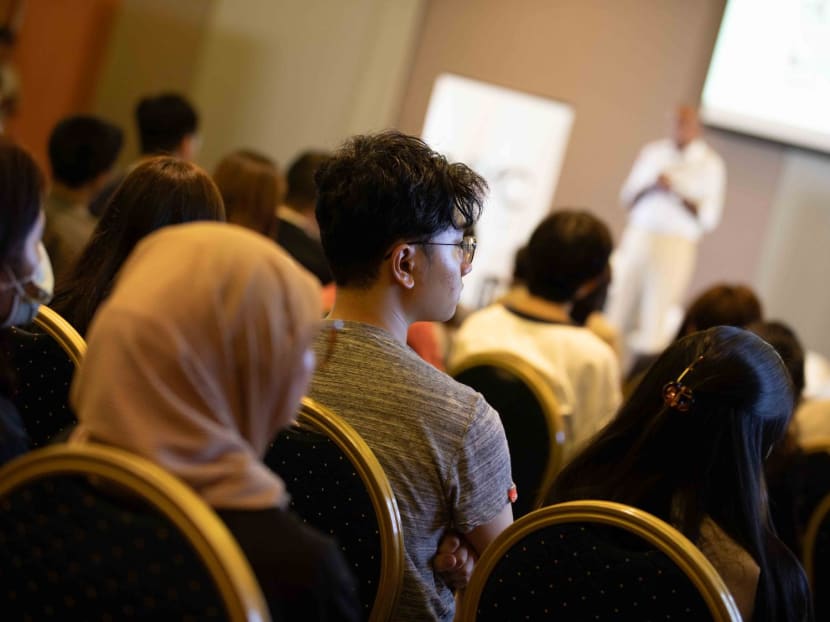
Participants at the National Youth Dialogue on May 24, 2023. To address a wish among the youth to play a greater role in policy, the Government is forming youth-led panels to involve more youths in policy-making.

This article is written in partnership with the Ministry of Communications and Information in support of Forward Singapore.
Each week, TODAY’s long-running Big Read series delves into the trends and issues that matter. This week, we look at what civic engagement among youths entails, and how some of them find meaning and purpose despite facing challenges. This is a shortened version of the full feature, which can be found here.
- Recent surveys have found that youths here think it is important to be involved in civic discourse and more are open to partnering or engaging the Government on issues they are interested in
- Youths interviewed by TODAY share how they want to be involved in civic engagement even though other priorities have stopped them from stepping forward
- Other youths also spoke about why they got involved in championing different causes and how they have stayed the course and found it rewarding despite some challenges
- The National Youth Council says that "participation can take many shapes and forms" and encourages youths to start small
- On its part, the Government is forming youth-led panels for young people to play a more significant role in policy formulation beyond just dialogues and consultations


SINGAPORE — Between juggling her hectic work schedule as a florist to taking care of her two-year-old daughter, Ms Melissa Goh, 35, often finds herself strapped for time, where participating in any civic discourse is the last thing on her mind.
With getting her daughter fed, bathed, and ready for bed, “there’s not much energy left to do anything, and you just want to focus on getting yourself ready for the next day,” said Ms Goh. “I don’t think you have much time for yourself till nine or 10 (at night),” she added.
For 25-year-old Daniel Loke, his career in the aviation industry takes precedence over everything else.
“I’m more worried about my career before these political things,” he said, noting that Singapore is politically stable and there is no “pressing need” for him to get involved.
Besides not having the time, another reason Mr Loke is not participating in civic discourse is the fear of being “cancelled”, which might affect his job prospects.
Still, youths such as Mr Loke told TODAY they want to be involved if they have the time and chance, but they are not stepping forward now because of the obstacles they cited.
“It’s more of a time constraint rather than not being interested," he said, adding that he thinks it is “very meaningful” to participate in civic matters and is "really happy to learn more".
Similarly, Ms Goh said that if she were to have more time and fewer commitments at home, she would definitely be "more involved".
WHY IT MATTERS
While time constraints and familial duties are often cited by youths as reasons that restrict them from participating in civic discourse, the third edition of TODAY’s Youth Survey 2023 found that 75 per cent of 1,000 respondents agree that youths should actively participate in civic discourse.
Furthermore, a poll from the National Youth Council (NYC) this year also revealed that 47 per cent out of 1,000 respondents are open to partnering or engaging the Government on issues they are interested in — a significant increase from 29 per cent in 2021.
With the myriad of causes and advocacy groups available in Singapore, there are many ways in which young Singaporeans can get involved in civic engagement.
“Participation can take many shapes and forms, from micro-volunteering opportunities to longer-term projects such as the Youth Action Challenge (YAC),” said Mr Chua from NYC.
Back in 2018, Ms Attiya Ashraf, 28, like most university students during their last semester, was thinking about possible career pathways that she could take. She was interested in social impact and international development and saw volunteerism as a way to attune herself to local Malay/Muslim issues.
“At the start, when I was figuring out my journey in terms of what causes I was interested in, entering Mendaki Club was a way for me to discover whether this was a space that I was interested in committing to,” said Ms Attiya, who has since become vice-president of the club run by the Malay self-help group.
Inspired by the strides taken by Germany and, by extension, the European Union to meet their targets for renewable energy, she started small with initiatives around her university (National University of Singapore) campus to reduce the use of single-use plastic disposables.
She worked with the fruit juice stall in a canteen in NUS to implement a disposable charge on disposable cups and encourage reusable glass cups.
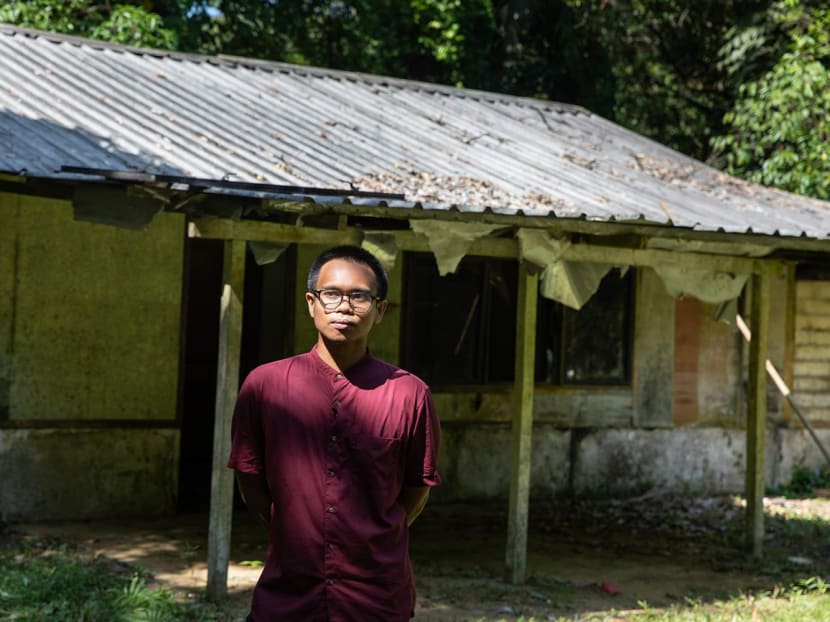
For Mr Nor Syazwan Abdul Majid, 27, his venture into advocacy work was inspired by his mother, who grew up in Pulau Ubin. In 2018, he founded an online social platform, Wan’s Ubin Journal, to preserve and celebrate the culture and heritage of the Orang Pulau (islanders) community of Pulau Ubin.
“I will say that grief is what drew me to do the work that I do...because my mum is grieving over the loss of her kampung, and that somehow got enmeshed with my grief of not being able to experience the heritage that my mum got to experience,” he said.
THE BIG PICTURE
In April, Mr Edwin Tong, Minister for Culture, Community and Youth, announced that youths will sit on two to three panels set up this year to offer their views on government policies.
He first announced the youth-led panels in Parliament on April 21, inspired by a TODAY news report published on April 11 about the desire of Singaporean youths to be engaged in in-depth discourse with policymakers.
Ms Kong Man Jing, 29, is looking forward to the youth panels and for more youths to have a chance at “co-creating policies” with the Government.
Ms Kong creates bite-sized educational videos on science and the environment on TikTok and Instagram, using the handle of JustKeepThinkingSg.
“I think we should leverage this opportunity that the Government has given. They are already extending their hand out; it’s time to extend our hand out and build something together,” said the sustainability and environment influencer.
Product manager Dev Bahl, 26, agreed with Ms Kong. His company, Mages Studios, uses augmented reality (AR) and virtual reality (VR) to build life-affirming solutions.
Of the youth panels, Mr Bahl said: “The Government has set up an infrastructure that is safe, educational, and genuinely allows us to work our energies as a collective towards positive change.”
Ms Attiya said: “I do think that the approach that these new panels are taking is quite exciting.” She sees them as a way for policymakers and youths to understand both sides better.
For one thing, policymakers can be aware of the various issues that youths face. At the same time, youths appreciate the nuances that policymakers have to grapple with as they develop policies and initiatives that have to align with the needs of society, she added.
THE BOTTOMLINE
When it comes to translating feedback into actionable plans, some activist groups have commented that it often feels like submitting their ideas to a “black box”, where it is difficult to ascertain how the Government deals with feedback.
While there may be some truth to it, mental health and environment advocate Ms Dorcas Tang from @earthtodorcas noted that the “black box” has become “smaller and smaller over the years”. “The transparency within the Government has been getting better and better throughout the last few years,” she said.
“If I meet up with ministers directly and I talk to them, actually, they’re very open to sharing their opinions. I feel I can share my opinions very freely with them, too.”
NYC’s Mr Chua pointed out that the Youth Panels are a good example of how open and transparent two-way communication can occur between youths and the Government.
Apart from the youth panels, NYC has a variety of programmes for youths to participate in and commit to in a way that complements their lives.
Youths can explore programmes ranging from self-discovery to mentorship, such as On My Way and MentoringSG, to connect with schooling seniors and industry professionals. Otherwise, there are programmes like Youth Corps if youths can commit more time.
Mr Chua added: “Everyone has a part to play, and we encourage youths to take any small step to be more informed or get more involved, as it will enhance our shared understanding of a collective reality and help us build towards a better future for everyone.
Related topics
National Youth Council Youth Big Read activismStay in the know. Anytime. Anywhere.

Subscribe to our newsletter for the top features, insights and must reads delivered straight to your inbox.
By clicking subscribe, I agree for my personal data to be used to send me TODAY newsletters, promotional offers and for research and analysis.






