
How the presidential candidates are wooing young voters, one TikTok trend and Instagram Reel at a time
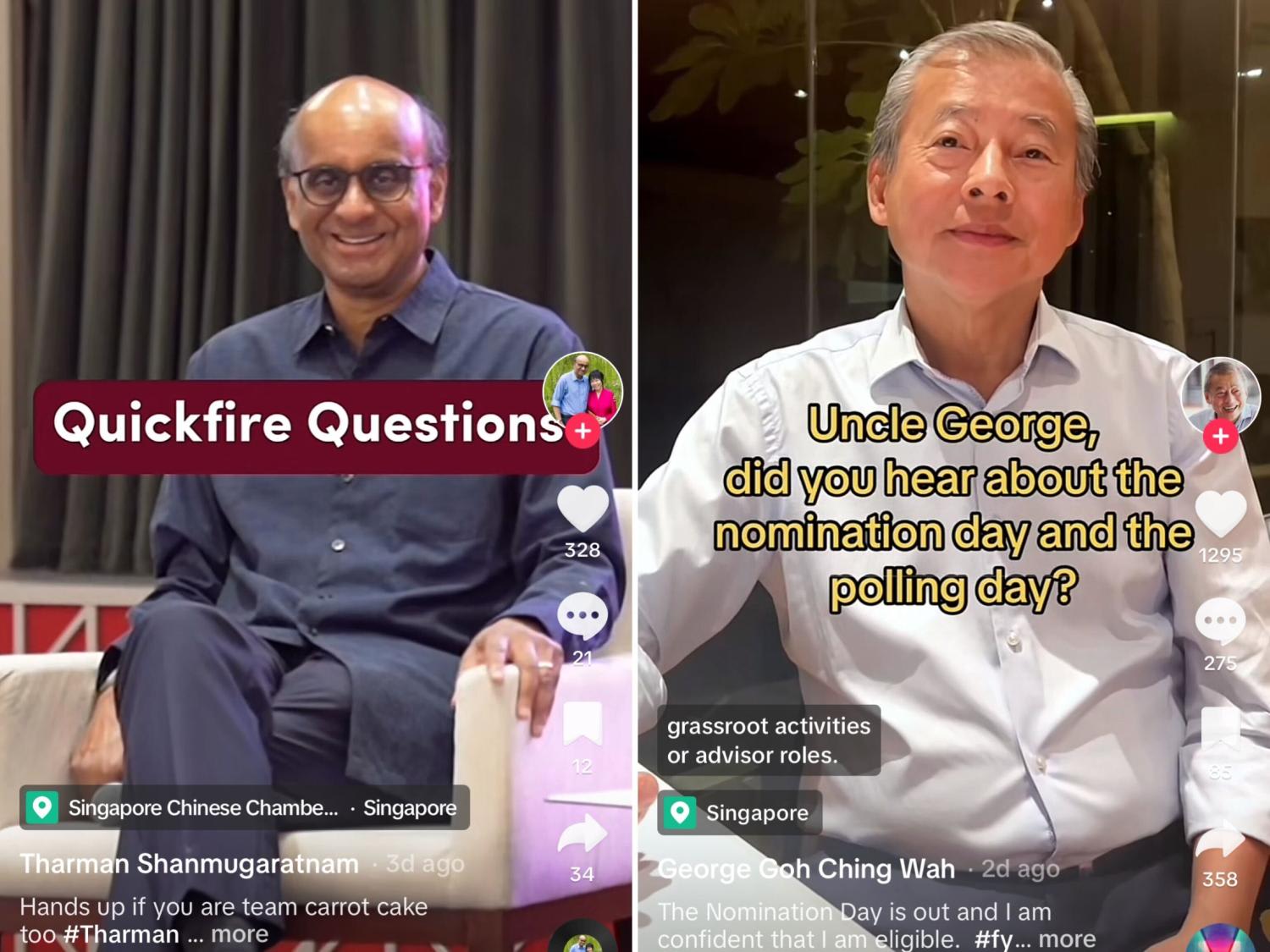
SINGAPORE — In the past week, presidential hopeful Ng Kok Song had lunch with social media influencers such as Luke Chan and Jade Rasif, while fellow candidate Tharman Shanmugaratnam learnt to dance from the viral mascot “Douyin Frog” that has been roaming around Singapore.
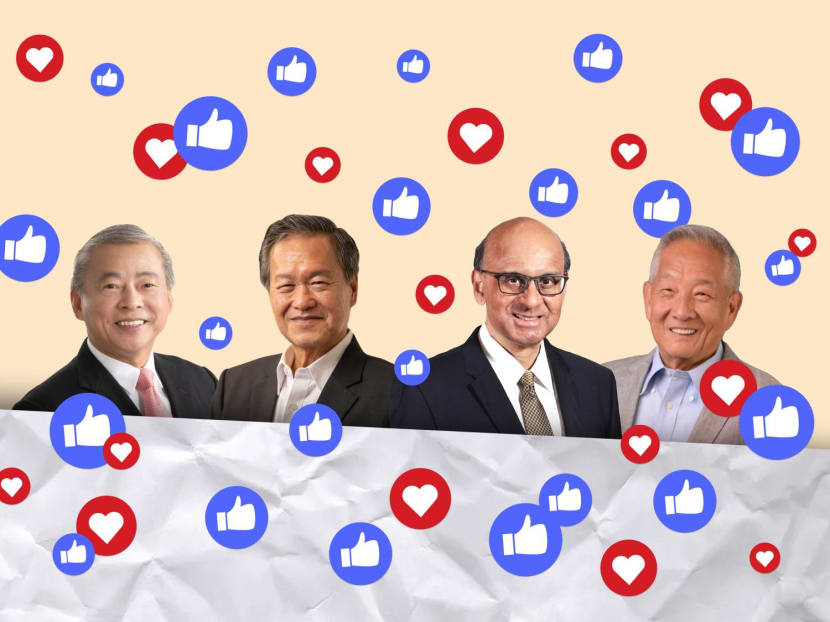

- Presidential hopefuls have been posting regularly across their social media platforms to engage young voters
- Beyond their political stance, these posts shed light on more intimate and personal aspects of their lives
- Experts agree that social media has become an indispensable part of political campaigning, allowing candidates to appear relatable and approachable
- Three of the four potential presidential candidates told TODAY about their social media strategies
- These include hiring a professional team and studying the performance of their posts


SINGAPORE — In the past week, presidential hopeful Ng Kok Song had lunch with social media influencers such as Luke Chan and Jade Rasif, while fellow candidate Tharman Shanmugaratnam learnt to dance from the viral mascot “Douyin Frog” that has been roaming around Singapore.
Meanwhile in the household of Mr George Goh, the children said he was a better driver and singer than his wife but also the bigger nag, and Mr Tan Kin Lian talked to a podcaster about why he does not drive a Maserati or Bugatti.
Of course, many Singaporeans might already know all this — all four potential presidential candidates posted about these activities on various social media platforms.
In fact, the four presidential hopefuls have made it a point to post regularly on social media. Beyond using Facebook, Instagram and TikTok as platforms to discuss their views on politics and the presidency, they also take to social media to take part in light-hearted trends and share aspects of their personal lives or even what they had for lunch.
Three of the four — Mr Tharman declined to respond to queries for this article — told TODAY that they view social media as a critical part of their campaigns, allowing them to quickly reach as wide an audience as possible and show voters who they are as individuals.
Analysts agree this is a wise strategy.
Dr Carol Soon, a principal research fellow and the head of society and culture at the Institute of Policy Studies (IPS) and vice-chair of the Media Literacy Council, said: “If candidates are not using social media extensively as part of their campaigning, they might as well be not campaigning at all.”
And while this is not the first Presidential Election to take place since the advent of social media, analysts said the social media landscape has changed so much since the last contested election in 2011 or even 2017, that it is a whole new ball game for candidates, offering them new opportunities but also fresh challenges.
WHAT THE CANDIDATES ARE DOING
Using the Meta Ad Library, a tool provided by the social media company to track ad spending across Facebook and Instagram, TODAY was able to find out that Mr Ng has so far spent around S$10,500 on Meta advertisements in the last week, while Mr Tan has spent less than S$100 since launching his presidency bid.
Mr Goh and Mr Tharman have not spent on advertisements on Meta platforms so far.
Similar data is not available for other platforms, including TikTok, which has become an increasingly important platform for politicians, election season or not.
In a sit-down interview with TODAY on Aug 4, Mr Ng, 75, said that he hired a social media company to manage his online campaign, because since the 2011 election, Singapore has raised a new generation of voters.
“A younger group of Singaporeans who have grown up in the social media world, so I realised that I had to reach out to them,” he said.
The former chief investment officer of Singapore’s sovereign wealth fund GIC added that his team studies the performance of his social media accounts and generates a report for him weekly.
“Are you gaining more and more followers? And they draw for me a chart, how am I comparing with Tharman, how am I comparing with Tan Kin Lian and George Goh? And what are the issues that people are interested in?”
The team also gives him immediate feedback on what online users are saying about his latest media appearances and social media posts.
So for example, in early August, his team told him that “people now know Ng Kok Song as an investment expert, but people still do not know Kok Song as a person”, he said.
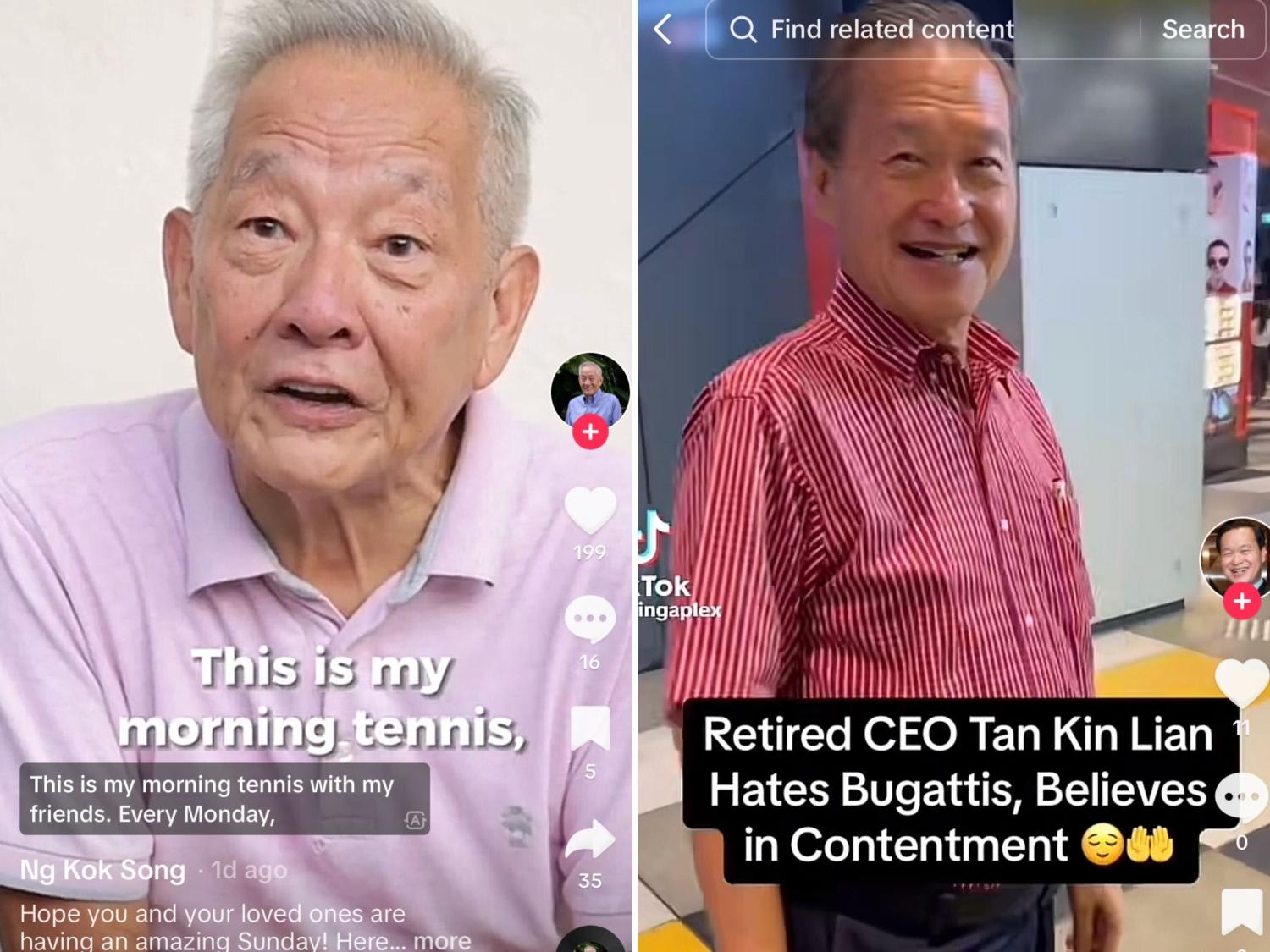
That gap has since been steadily filled, with Mr Ng having put out videos to show his more personal side. This includes a recent video testimonial series, including one featuring Dr Carol Tan, who cared for his fiancee Sybil Lau’s late mother.
In the video, Dr Tan describes how Mr Ng and Ms Lau had shown care to the hospital staff despite the difficult time they were going through themselves.
Similarly, Mr Goh’s media team told TODAY that social media is an integral part of the 63-year-old businessman’s campaign.
“For someone like Mr George Goh who is not a public figure and an independent candidate without a huge machinery behind him, it is crucial that we use the most effective ways to get as many people to know him at speed and scale,” the team said in a WhatsApp response to queries.
“Social media platforms also enable the team to translate who Mr George Goh is, his life, his beliefs and his connection with people, authentically and directly to our audiences,” they said, adding that his social media posts aim to showcase “his roles as a father, a business leader, a philanthropist and a former Non-Resident Ambassador to Morocco”.
The team has also put out a special docu-series on Youtube titled “Time for Chain” (a wink at online users who have made fun of Mr Goh’s mispronunciation of the word “change”), aimed at shedding light on Mr Goh’s journey behind-the-scenes, as well as an e-book, “Lights on Istana”, to educate voters about the role of the presidency.
“Many people view the President’s role as largely ceremonial. Mr George Goh would like to shift this perception,” the team said.
As for Mr Tan, this year’s election is his second time making a bid for President. The 75-year-old said he can see a “vast difference” in the social media landscape since 2011, when the main platforms candidates used were Facebook and Blogger.
He added that social media is in fact “of top priority” in his bid, and he uses WhatsApp and Facebook as his main form of communication. For these platforms, he has an army of 200 supporters “who help to spread my campaign messages virally to their contacts”, he said.
He also has a team of young volunteers who manage his TikTok and Instagram pages to reach out to younger Singaporeans, he added.
While he plans to continue actively spreading his message on social media, Mr Tan noted that netizens may find the deluge of information throughout the campaign period overwhelming.
“I hope that they will not find it irritating. Perhaps, they can just ignore the messages that they are not interested in,” he said.
SOCIAL MEDIA THE MAIN WAY TO REACH YOUNG VOTERS
The plethora of social media apps is indeed a challenge, analysts noted.
During the 2011 Presidential Election, the main platforms that the candidates used were blogs and Facebook. Instagram had only been launched in 2010 and was not that popular yet, noted Dr Natalie Pang, an associate professor at the National University of Singapore’s (NUS) communications and new media department.
Today, she noted, there are not only more social media platforms but their users are also more diverse, and each platform has its own sensibilities and user demographic.
Dr Saifuddin Ahmed, an assistant professor at Nanyang Technological University’s Wee Kim Wee School of Communication and Information, added that young social media users are not just passive content consumers who would consume any information offered to them.
“Instead, they are observant and evaluate authentic content with a keen eye,” he said.
Dr Soon from IPS agreed, adding: “The reality is social media is an amplifier, it amplifies the attractiveness of candidates and also their less appealing traits. As such, it is critical for candidates to come across as authentic, clear and consistent in their messaging.”
Some of the candidates’ attempts to engage social media users have attracted their fair share of critics, for example those calling their efforts “wayang”, a Singlish term meaning that someone is putting on a show. But many other netizens have expressed support and encouragement too.
For example, TikTok users have lauded Mr Goh’s attempts to take on trending challenges as “sporting”, while an Instagram user commented on a post of Mr Tharman dancing: “Looks awkward but A+ for effort!”
Social media users have also left approving comments such as “cuteness overload!!!” on a TikTok post of Mr Ng having kaya toast for breakfast and given their thumbs up to Mr Tan’s “humble lunch(es)”, which he posted about on Facebook.
Dr Pang from NUS said: “Most of them use (social media) well, especially in terms of presenting key messages from their campaigns and articulating their values.”
She added: “In terms of putting out relevant content that taps the affordances of these platforms while engaging voters well, Mr George Goh, Mr Tharman Shanmugaratnam and Mr Ng Kok Song are all doing well.”
Dr Soon said Mr Tan’s posts would benefit from more context and articulation of their relevance to him running for presidency.
Challenging as it may be, social media is a necessary tool to reach out to the young, especially ones who may otherwise be uninterested in politics, said Dr Ahmed.
“We observe across most societies that the younger population is least interested in politics, including in Singapore,” he said, adding that politicians have had “lesser success” connecting to this apathetic voter base through traditional means of campaigning.
“The hope, of course, would be that (social media engagement) translates into genuine political interest and engagement later.”
Related topics
Presidential Election 2023 Tan Kin Lian Ng Kok Song George Goh Tharman Shanmugaratnam social mediaStay in the know. Anytime. Anywhere.

Subscribe to our newsletter for the top features, insights and must reads delivered straight to your inbox.
By clicking subscribe, I agree for my personal data to be used to send me TODAY newsletters, promotional offers and for research and analysis.






