
Young gig workers need educating on harsh realities of platform work, say researchers of 'in-work poverty'
SINGAPORE — Young workers need to be better educated about the harsh realities of gig work such as riders with food-delivery platforms, academics said.
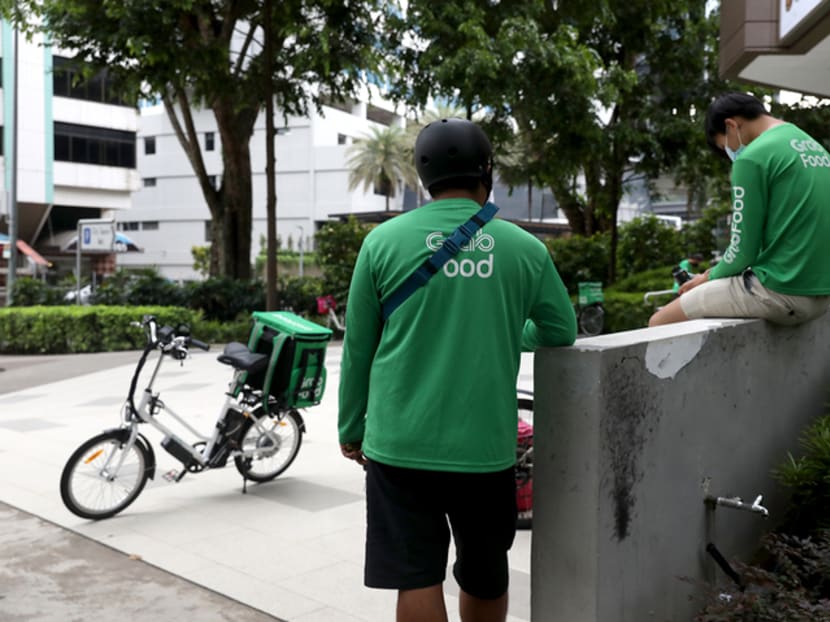
The harsh realities of being a gig worker, such as a food delivery rider, should be explained to the young, academics told a symposium on March 29, 2023.

- Academics have called for better education about the harsh realities of gig work among young workers
- They note that the young are often initially drawn to the perceived flexibility these jobs offer, as well as the appeal of being their own boss and earning at their own pace
- In reality, young gig workers often find themselves faced with leading a “hand-to-mouth job” and a lifestyle that offers little room for career and income growth in the long term
- The findings were presented at a symposium on "in-work poverty" at the National University of Singapore


SINGAPORE — Young workers need to be better educated about the harsh realities of gig work such as riders with food-delivery platforms, academics said.
The young are often initially drawn to this type of work because of its perceived flexibility, the control over their time and the appeal of being their own boss, they told a symposium on "in-work poverty".
In reality, these workers often find themselves slogging away at a “hand-to-mouth job” and a lifestyle that offers little room for career and income growth in the long term, the academics said.
Ms Thian Wen Li from the Institute of Policy Studies (IPS) said: “Once you stop your hands, your livelihood is jeopardised.”
A research associate at the IPS Social Lab, Ms Thian was speaking on Wednesday (March 29) at the Symposium on In-Work Poverty and the Challenges of Getting By Among the Young, which was held at the National University of Singapore (NUS).
Organised by the Social Service Research Centre at NUS' Faculty of Arts and Social Sciences, the event delved into key findings from an ongoing research study on the topic that began in 2019.
For the study on young gig workers in Singapore, the research team conducted in-depth interviews with 83 participants aged 21 to 40. They included 52 delivery riders and 31 private-hire drivers.
The team spent more than 300 hours in the field, shadowing the riders on ride-alongs or engaging in in-car interviews with the drivers.
The financially insecure plight of gig workers has been in the spotlight in recent times.
Earlier this year, the Government announced details of how more low-income gig workers will be brought into the Central Provident Fund scheme to better secure their financial futures.
‘THE LESS YOU WORK, THE LESS YOU EARN’
Platform workers who depend substantially on platform work as the sole or significant portion of their income may realise that its benefits are not necessarily as rosy as they thought, Ms Thian said.
Mr Shamil Zainuddin, a research associate at the IPS Social Lab, said that some of these workers were drawn to the sticky logic that “the more you work, the more you can earn”, but the opposite is also true — “the less you work, the less you earn”.
Gig workers face an unstable and precarious work position regardless of their qualifications, he said.
Conversely, working long hours in pursuit of higher pay comes with its trade-offs in terms of time for leisure and family.
“And the reality is that many of the riders are not even earning that much because of the huge variation of earners in platform work,” Ms Thian said.
The team's survey found that the median monthly earnings of food delivery workers was S$1,925.
Gig workers are also susceptible to "platform dependency", where their heavy reliance on platform work means that they are particularly vulnerable to market trends.
For instance, the sharp downward trend in fares in recent years could have meant that there were unpredictable finances and fluctuations in their earnings, she said.
Unlike other blue-collar jobs, where workers get at least some career progression and wage increments, platform workers often face a lack of long-term sustainability, trajectory and social protection.
Dr Mathew Mathews, head of IPS Social Lab, said that traditional work is appealing in the long-term because workers who stay in the job are able to build skills over time.
However, workers who stay in a gig job find that their skills do not appreciate at all, he said in response to queries from TODAY.
Given their skill sets and education levels, low-wage workers often find themselves caught in the dilemma of horizontal mobility rather than upward mobility, the study found.
It also found that if platform workers do try to leave gig work for traditional work, many ultimately return to the freelance work because they find the transition difficult.
“Once you get into gig work — for example, platform work — you get used to a certain kind of momentum, which generally means lesser direct supervision,” Dr Mathews said.
He added that dealing with or negotiating the demands of a boss or supervisor may be a bit more difficult if the worker has not experienced this type of management style in a while.
Often, this leads to some kind of frustration, which results in some of them leaving formal work to return to the gig economy.
“It’s important to continue to take note that people who get into this industry need to be educated about the realities of the job.Dr Mathew Mathews, head of IPS Social Lab”
WORKERS SHOULD BE EDUCATED ABOUT JOB REALITIES
Despite the sacrifices made by platform workers and the risks they take, this type of work often remains the better option for many low-wage workers, given their education levels and the lack of better job options.
“It’s important to continue to take note that people who get into this industry need to be educated about the realities of the job,” Dr Mathews said.
With even more types of work set to be “gig-ified” over time, young workers need to know their rights and how to negotiate the downsides that may come with informal platform work.
The research team also highlighted the need for greater attention to be paid to the long-term protection of gig workers – such as the representation of platform workers by a coalition, to bargain and advocate for their rights.
Responding to queries from TODAY, the Digital Platforms Industry Association (DPIA) said that a survey they conducted found that most riders see gig work as supplementary, short term or intermittent.
The survey found that 65 per cent of riders conduct gig work on a part-time basis, and many do not rely on gig work as their sole source of income, the association said.
“That said, DPIA recognises that career upskilling and progression are important for our riders. While riders are with the platform, DPIA members provide our riders who are keen to upskill with learning resources on topics which may be relevant to them as they perform their roles, or for those looking to transition to other sectors for career or personal development,” said DPIA.
“We welcome the Ministry of Manpower’s complementary career conversion programmes to support riders who wish to transit to other sectors, and we will continue to work closely with the ministry to ensure a smooth implementation of the recommended protections for a sustainable platform economy,” it added.
Related topics
gig worker platform workers low income NUSStay in the know. Anytime. Anywhere.

Subscribe to our newsletter for the top features, insights and must reads delivered straight to your inbox.
By clicking subscribe, I agree for my personal data to be used to send me TODAY newsletters, promotional offers and for research and analysis.






