
Youths in Singapore more likely to report higher levels of social isolation and loneliness: IPS poll
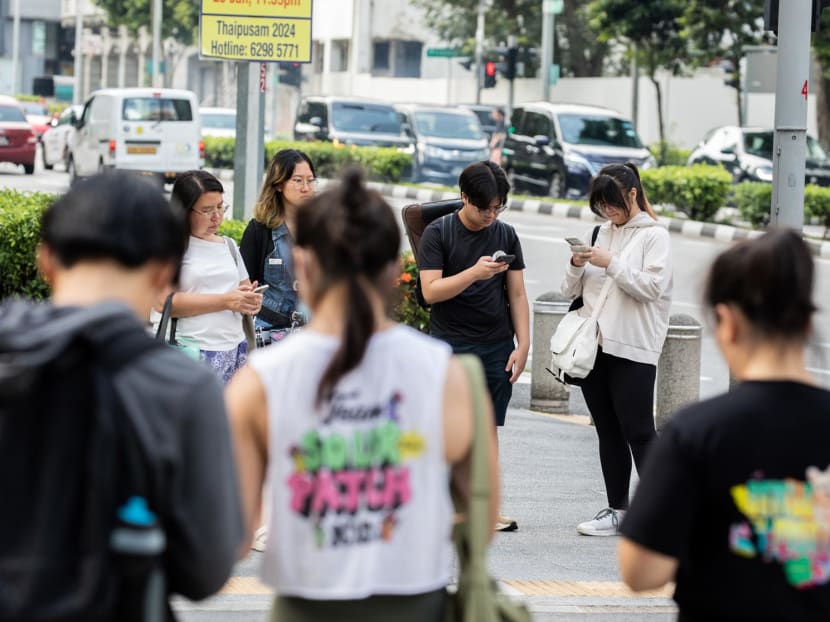
SINGAPORE — More than half of young people here aged 21 to 34 felt anxious sometimes about talking to people in person and find it easier to communicate online.


This audio is AI-generated.
- More than half of young people aged 21 to 34 said they felt anxious sometimes about talking to people in person and find it easier to communicate online
- This was part of a new survey’s broader finding that young people were more likely to report higher levels of social isolation and loneliness
- The survey was done by the Institute of Policy Studies ahead of its Singapore Perspectives 2024 conference on Jan 29
- It surveyed 2,356 Singaporeans and permanent residents aged 21 to 64 between November and December 2023
- It covered the domains of family, work, well-being and civic engagement


SINGAPORE — More than half of young people here aged 21 to 34 felt anxious sometimes about talking to people in person and find it easier to communicate online.
This was part of a new survey’s broader finding that young people were more likely to report higher levels of social isolation and loneliness.
The findings of the survey — a pre-conference poll done by the Institute of Policy Studies (IPS) — were unveiled at the Singapore Perspectives 2024 conference on Monday (Jan 29).
Organised yearly, Singapore Perspectives — IPS’ flagship conference — seeks to engage Singaporeans in debates about public policy challenges that the country faces.
This year’s conference is themed “Youth”, and consisted of three online forums held on Jan 22, followed by an in-person conference on Jan 29.
Before the conference, IPS conducted a poll to better understand the attitudes, values and opinions of Singaporeans towards a range of issues concerning family, well-being, work, civic engagement and life transitions, it said in a media release on Monday.
The poll, done between November and December 2023, surveyed 2,356 Singaporeans and permanent residents aged 21 to 64.
The following were some of its key findings.
SOCIAL ISOLATION AND WELL-BEING
In the wake of the Covid-19 pandemic, when lockdowns and social distancing measures greatly disrupted everyday interactions with friends and family, concerns about an “epidemic of loneliness” have only grown louder, IPS said.
And while loneliness is often characterised as an issue among seniors, recent research increasingly demonstrated that the young are not immune to it either.
What IPS’ pre-conference poll found out was that:
- More than half (53 per cent) of respondents aged 21 to 34 found it easier to talk to people online than offline, compared with 46 per cent of those aged 35 to 49 and 31 per cent of those aged 50 to 64
- More than half (56 per cent) of people aged 21 to 34 reported feeling anxious sometimes if they have to talk to people in person. In comparison, less than half (43 per cent) of those aged 35 to 49 and about one-third (32 per cent) of those aged 50 to 64 reported feeling the same
The poll also found that young people are more likely to report higher levels of social isolation and loneliness, with those in the 21 to 34 age band having a higher loneliness score.
Respondents were surveyed on a three-item loneliness scale and asked to indicate their responses (with “1” being “hardly ever” and “3” being “often”) to the following questions:
- How often do you feel that you lack companionship?
- How often do you feel left out?
- How often do you feel isolated from others?
Their responses were then summed to form a total score, with higher scores indicating greater loneliness.
The poll found that:
- Respondents aged 21 to 34 reported the highest mean score of 5.53
- Respondents aged 35 to 49 reported a mean score of 5.09
- Respondents aged 50 to 64 reported the lowest mean score of 5.03
Singles aged 21 to 34 also reported a higher loneliness score, compared with their peers who were dating.
Dr Chew Han Ei, an adjunct senior research fellow at IPS, said at a media briefing on Jan 26: “Some of the thinking behind why (young people) will report higher levels of social isolation is because they are at the life stage when they should be making transitions to the workplace, transitions to higher education, and missed out on a lot of these opportunities during the pandemic.”
“They don’t go for orientations, they don’t go for their immersion programmes overseas, and there’s no water-cooler conversations at the workplace or physical orientations where they go around to meet people. So they missed out on building these social relations, and I think this could be one of the reasons (the youth respondents reported higher levels of loneliness).”
FAMILY AND RELATIONSHIPS
Young Singaporeans also seem to have a certain order of milestones they want to achieve, unlike the older generations, Dr Chew said.
“When you talk to the youths, they almost have checkboxes these days before they can consider marriage and parenthood. And these checkboxes are nearly all material in nature — they want a comfortable life, they want a good job, they want the ability to have a home — and then they will say, ‘Okay, then marriage’,” he said.
“If you look at maybe two generations ago… the priorities are, I think, equally weighted: I get married, get a job and have children. There’s no very strict order, (though) there is a rough order. But now I think, when you talk to the young people, they do want a comfortable life first.”
Should they have to trade off the comfort they want in their individual lives for marriage, they may be more hesitant to make the move, Dr Chew added.
The pre-conference poll indeed found that singles aged 21 to 34 are more likely to say that they have other priorities — including their job, studies and self-discovery — to focus on, and that they do not have the time or energy to date.
More than half of singles aged 21 to 34 aspire towards marriage and parenthood, even though the majority believe that it is not necessary to get married or have children in a marriage.
OTHER INTERESTING FINDINGS
Besides the above, the poll found that:
- Almost six in 10 in the 21-34 age group foresee themselves needing or wanting to make multiple career switches over their lifetime, compared with 50 per cent for the 35-49 age group and 41 per cent for the 50-64 age group
- More than half (53 per cent) in the 21-34 age group feel somewhat or very prepared for the eventual adoption of technological innovations and disruptions — such as generative artificial intelligence, Web3 and blockchain — in the workplace, compared with 48 per cent (for the 35-49 group) and 46 per cent (50-64)
- About two-thirds aged 21-34 have taken part in at least one online civic activity in the past year, and 63 per cent consider online advocacy to be a useful form of civic participation
IPS said that the poll findings suggest a need for policymakers to address the economic and practical considerations of the younger generation so that they can be better equipped to navigate the journey ahead in achieving both career and personal goals, and later “contribute towards building a stronger future for Singapore”.
These include opportunities to improve access to mental health services and resources here.
Addressing these may go some way in managing youth loneliness and social isolation, as well as in alleviating some of the obstacles faced in forming and maintaining relationships, IPS added.
Related topics
Youth loneliness IPSStay in the know. Anytime. Anywhere.

Subscribe to our newsletter for the top features, insights and must reads delivered straight to your inbox.
By clicking subscribe, I agree for my personal data to be used to send me TODAY newsletters, promotional offers and for research and analysis.





