
A decade to remember: 10 events, trends that made headlines around the world from 2010 to 2019
From outbreaks of civil unrest in many hotspots to rising awareness of women’s rights and climate change, this past decade has witnessed a turbulent period of political and social change.
It also saw the rise and fall of one of the modern world’s most heinous organisations, a double tragedy for Malaysia’s aviation industry and a bruising trade war between the world’s two biggest economies.
TODAY recaps the biggest events that made headlines around the world from 2010 to 2019:
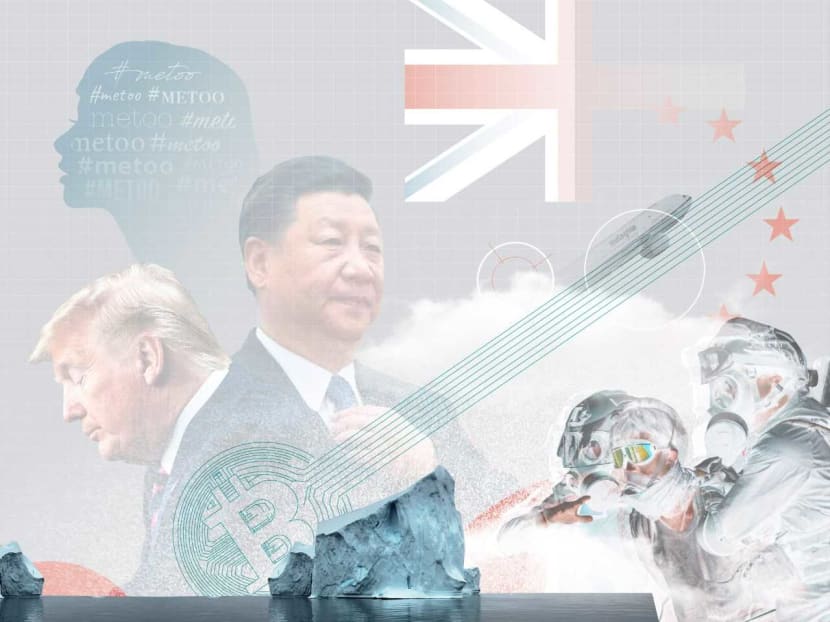
From twin tragedies for Malaysia's aviation industry, to the #MeToo movement and a China-United States trade war, among other pivotal events, 2010 to 2019 was a turbulent decade.



From outbreaks of civil unrest in many hotspots to rising awareness of women’s rights and climate change, this past decade has witnessed a turbulent period of political and social change.
It also saw the rise and fall of one of the modern world’s most heinous organisations, a double tragedy for Malaysia’s aviation industry and a bruising trade war between the world’s two biggest economies.
TODAY recaps the key events and developments around the world from 2010 to 2019:
1. CIVIL UNREST
Numerous centres around the globe have been rocked by civil unrest over the past decade. While some brought about regime change, others paved the way for the rise of violent terrorist organisations.
Closer to home, Asia has seen two notable series of protests.
In Thailand, long-running bitter divisions between two major political groups led to a series of increasingly tense demonstrations. The protests culminated with then-army chief General Prayuth Chan-ocha staging a coup and seizing control in 2014. He was later installed as prime minister, and remains firmly in control.
The financial hub of Hong Kong saw two mass protest movements over the decade, with one that shows no signs of dying down soon.
The first, the 2014 “umbrella movement”, was about getting the universal suffrage that Hong Kong was promised after its return from Britain to Chinese sovereignty in 1997.
A proposed law allowing extradition to mainland China triggered the latest series of protests, which have roiled the territory and broadened in terms of the grievances raised since June 2019.
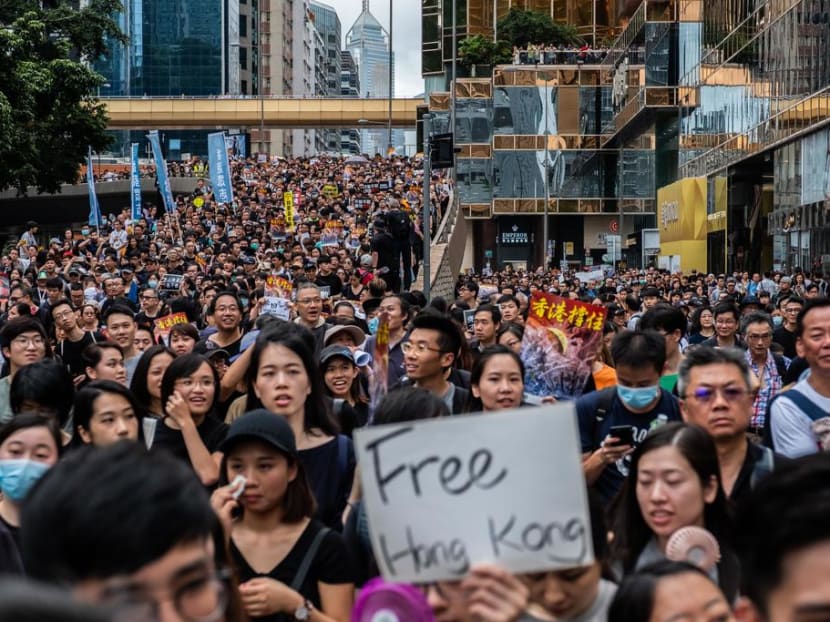
Ongoing protests in Hong Kong were triggered in June 2019 by a proposed law allowing extradition to mainland China. Photo: The New York Times.
Further afield, several anti-government protests and armed uprisings, known collectively as the Arab Spring, spread across much of the Islamic world as early as 2010 though they rarely led to the peace and democracy some had hoped for.
Most notable is the ongoing Syrian civil war that started in 2011 against President Bashar al-Assad’s government. The chaos that followed gave rise to the terrorist group Islamic State in Iraq and Syria (ISIS).
Reuters reported on Dec 23 that 2020 may be a year filled with political unrest for American citizens due to political divisions that will surround the Nov 3, 2020 US presidential election.
2. THE RISE AND FALL OF ISIS
ISIS, which has become synonymous with death and terror, came into existence when it split from the al Qaeda terrorist organisation during the Syrian Civil War.
The group’s violent reign of terror began in 2014, when its leader, Abu Bakr al-Baghdadi, declared the establishment of a caliphate after conquering a third of Iraq and Syria.
ISIS started losing ground from 2017 onwards after suffering from several catastrophic defeats by a US-led coalition, and was eventually declared eliminated in 2019. Baghdadi blew himself up in October this year when he was cornered by US special forces troops.
ISIS was not only able to inspire other terrorists to act in its name, such as the 2016 Jakarta attacks, but it fanned the flames of Islamophobia that led to several lone wolf attacks like 2019’s Christchurch mosque shooting.
Kurdish and Western intelligence officials recently told the BBC that there is now growing evidence that ISIS is regrouping in Iraq to continue their attacks, though they are no longer interested in holding territory.
Meanwhile, Southeast Asian nations are staying vigilant to the ISIS threat after it was reported that some of the group’s militants from the region were returning to their home countries.
3. RISE IN NATIONALISM
Nationalism has been increasingly roiling politics across several countries in the West and elsewhere this decade.
It saw the unexpected election of US President Donald Trump in 2016 with his “America first” policies, and the rise to power of retired military officer Jair Bolsonaro in Brazil in early 2019.
The movement also led to several right-wing populist parties in Europe such as Prime Minister Victor Orban’s Fidesz party. In most cases, the rise of nationalism stemmed from a fear of immigrants and a lack of economic opportunity.
The phenomenon has been less evident in Asia, though India’s Prime Minister Narendra Modi has been accused of promoting a form of Hindu nationalism, most recently with a move to strip Muslim-dominated Jammu and Kashmir of its autonomous status.
4. BREXIT
A blending of the words of “Britain” and “exit”, the word first came into the spotlight when just over half of British voters backed leaving the European Union (EU) in a polarising June 2016 referendum.
Britons voted to leave the EU partially as a result of unhappiness caused by an influx of immigrants that the EU’s open borders allowed.
However, the Brexit deadline was pushed back several times, as lawmakers could not agree on the manner in which the UK would leave the EU.
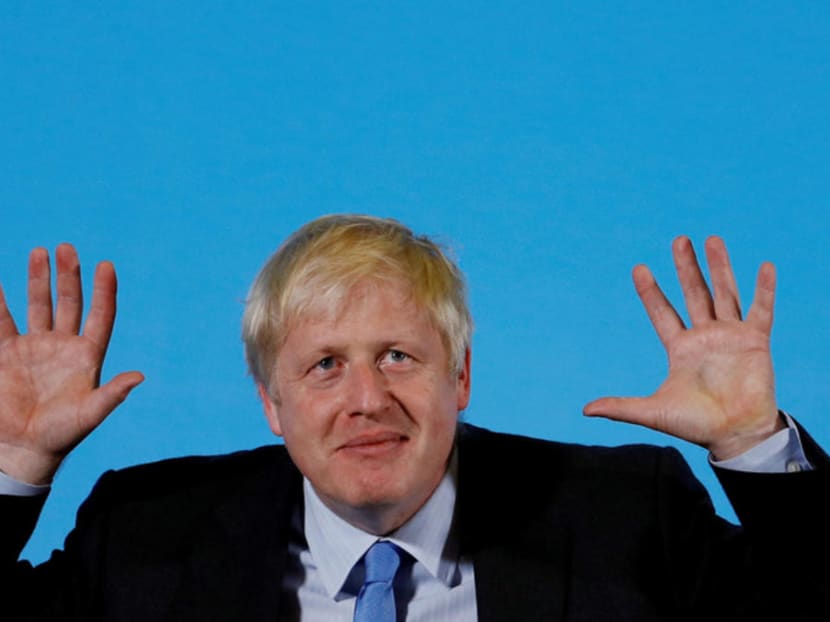
The emphatic victory by Prime Minister Boris Johnson at Dec 12, 2019 elections means Brexit is set to occur by Jan 31, 2020. Photo: Reuters
The incumbent Prime Minister Boris Johnson and his Conservative Party won a landslide victory at the Dec 12, 2019 elections, which give him the numbers in parliament needed to pass his Brexit divorce deal
He had promised that he would get the UK out of the EU if he won the majority, setting Jan 31, 2020 as the deadline for Brexit. But the UK still faces tough talks with the EU on a trade deal.
5. US-CHINA TRADE WAR
The ongoing economic conflict between the two superpowers has been simmering for more than a year since the Trump administration picked a fight with China in early 2018 as a means to address practices it said put US companies at a disadvantage.
In the months that followed, both countries have added tariffs on billions of dollars of the other's goods, broken good faith promises, and traded public insults.
Commenting on the impact of the trade war on Singapore during a CNN interview in early October, Prime Minister Lee Hsien Loong said that it is not only a problem for Singapore, but the rest of the world.
Despite repeated indications in recent months that a preliminary truce was in the offing, markets are still waiting to see such a deal materialise.
The impasse between the two countries may not be resolved next year.
In early December, Mr Trump said the US was doing “very well” from the trade war and he was in no hurry to sign an agreement before he runs for re-election next November.
“In some ways it’s better to wait until after the election for the China deal. But they (China) want to make a deal now,” he said.
6. MALAYSIA AIRLINES TWIN TRAGEDIES
In 2014, Malaysia’s national carrier was left reeling from two aviation disasters that occurred just months apart.
The first was the still unsolved disappearance of flight MH370 while it was en route from Kuala Lumpur to Beijing on March 8 that year. There were 239 people on board.
Satellite data analysis showed the plane likely crashed somewhere in the southern Indian Ocean, off the coast of Western Australia. However, two major searches failed to come up with any significant findings. Just four months later, flight MH17 was shot down on July 17 while it was flying over territory held by pro-Russian separatists in eastern Ukraine.
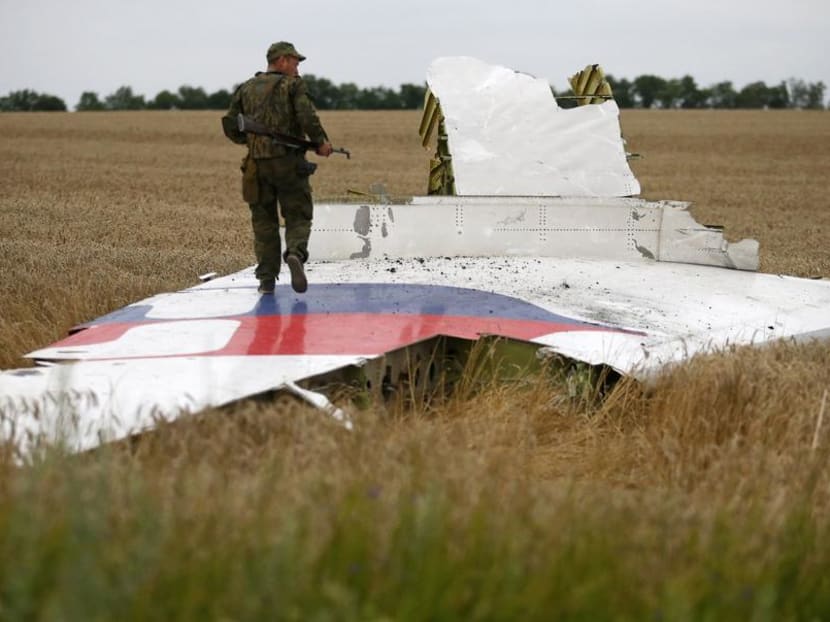
A pro-Russian separatist standing on part of the wreckage of the Malaysia Airlines Boeing 777 plane after it crashed near the settlement of Grabovo in the Donetsk region.Photo: Reuters
A Dutch-led international team of investigators has charged four suspects, three Russians and a Ukrainian, with the murder of all 298 people aboard. They will go on trial in absentia in a Dutch court in March next year.
While Malaysia’s Prime Minister Mahathir Mohamad has yet to announce whether the airline will be shut down, sold or refinanced, after he raised the topic in March this year, the twin disasters have had an impact on the aviation industry.
Forbes reported earlier this year that since the incident, the industry has been rolling out technology that can enable planes to be tracked at all times, among other things.
7. #METOO MOVEMENT
The #MeToo hashtag, which has now become a global rallying cry against sexual harassment, started as a 2017 movement in the US as a response to accusations of sexual assault and harassment in Hollywood.
It eventually emboldened women around the world to recount their experiences of being verbally abused, groped, molested or raped.
While there is still a long way to go to change behaviour, the movement has at least helped to open up conversations both in workplaces around the world, and among men who were previously unaware of how many of their female friends have experienced sexual assault and harassment.
8. SOCIAL MEDIA AND FAKE NEWS
News-related hoaxes have been around for a long time, but the wide availability of an array of social media platforms, such as Facebook and various messaging services, this decade has meant such misinformation can be spread to more people more quickly.
The phrase “fake news” entered the everyday lexicon thanks to US President Donald Trump. Since his election win in November 2016, Mr Trump gave new life to the phrase through its liberal use, even though critics have pointed out that he himself has been less than rigorous about fact-checking his public utterances.
It was later revealed that Russians bankrolled thousands of fake political ads during the 2016 US elections.
Facebook, which had its historic initial public offering in May 2012, said it wants to provide politicians with a “level playing field” for communication and not intervene, regardless of what is said.
This policy of not fact-checking political advertisements on its service has drawn ire from critics, who say it allows politicians to lie and then pay Facebook to amplify their lies.
As the world prepares to enter a new decade, the fight against fake news will continue to be an uphill struggle, experts say. Even if social media platforms make a commitment to tackle it, bad actors will always evolve and develop new approaches, they add.
9. CLIMATE CHANGE
Melting glaciers, rising sea levels and erratic weather – all evidence of climate change, scientists agree. But it is not a new phenomenon, and experts have long warned about the negative impact it will have on the environment.
In 2016, targets were set by the Paris Agreement to limit the rise in global temperatures to no more than 2°C above pre-industrial levels, and 1.5°C at best.
However, to date, countries have not been unable to come to an agreement on the details, and US President Donald Trump pulled the US out of the Paris deal.
The silver lining, however, is that recent years have seen younger people taking a greater interest in the dire predictions of scientists who have foreshadowed what might become of the earth if we do not take action to protect it.
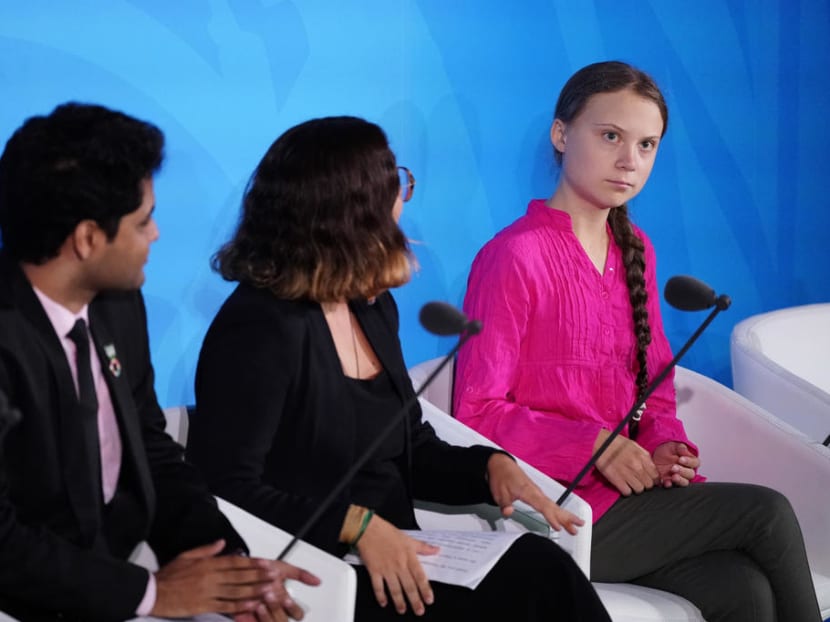
Greta Thunberg (far right) attending the 2019 United Nations Climate Action Summit at the United Nations headquarters in New York City, United States. Photo: Reuters
One such youth is the Swedish teenager and climate activist Greta Thunberg, who has inspired other youths around the world with her FridaysForFuture movement, a protest which demands greater action to prevent further effects of climate change.
10. CRYPTOCURRENCY CRAZE
What started out as a very niche investment instrument in 2009 caught the attention of mainstream investors at the end of last 2017 when their value soared.
Bitcoin — the best-known cryptocurrency — began its exponential climb in November 2017, surging by 200 per cent over the next six weeks to hit its peak value of close to US$20,000 per coin on Dec 17 that year.
But the dramatic ascent was short-lived.
Bitcoin’s spectacular rise was followed by an equally spectacular fall, with its price dropping drastically throughout 2018, which saw at least an 80 per cent drop from its peak.
Besides Bitcoin, other popular cryptocurrencies such as XRP and Ethereum also saw similar crashes in value though some commentators still see a bright future for alternative stores of value.
Related topics
decade history lookback climate change PoliticsStay in the know. Anytime. Anywhere.

Subscribe to our newsletter for the top features, insights and must reads delivered straight to your inbox.
By clicking subscribe, I agree for my personal data to be used to send me TODAY newsletters, promotional offers and for research and analysis.






